


Portable Appliance Testing (PAT) London
- Qualified Engineers
- Qualified Engineers
- Detailed Digital PAT Test Report
- UK Wide Coverage
- Pass/Fail Labelling on All Tested Appliances
- Suitable for Offices, Retail & Commercial Premises
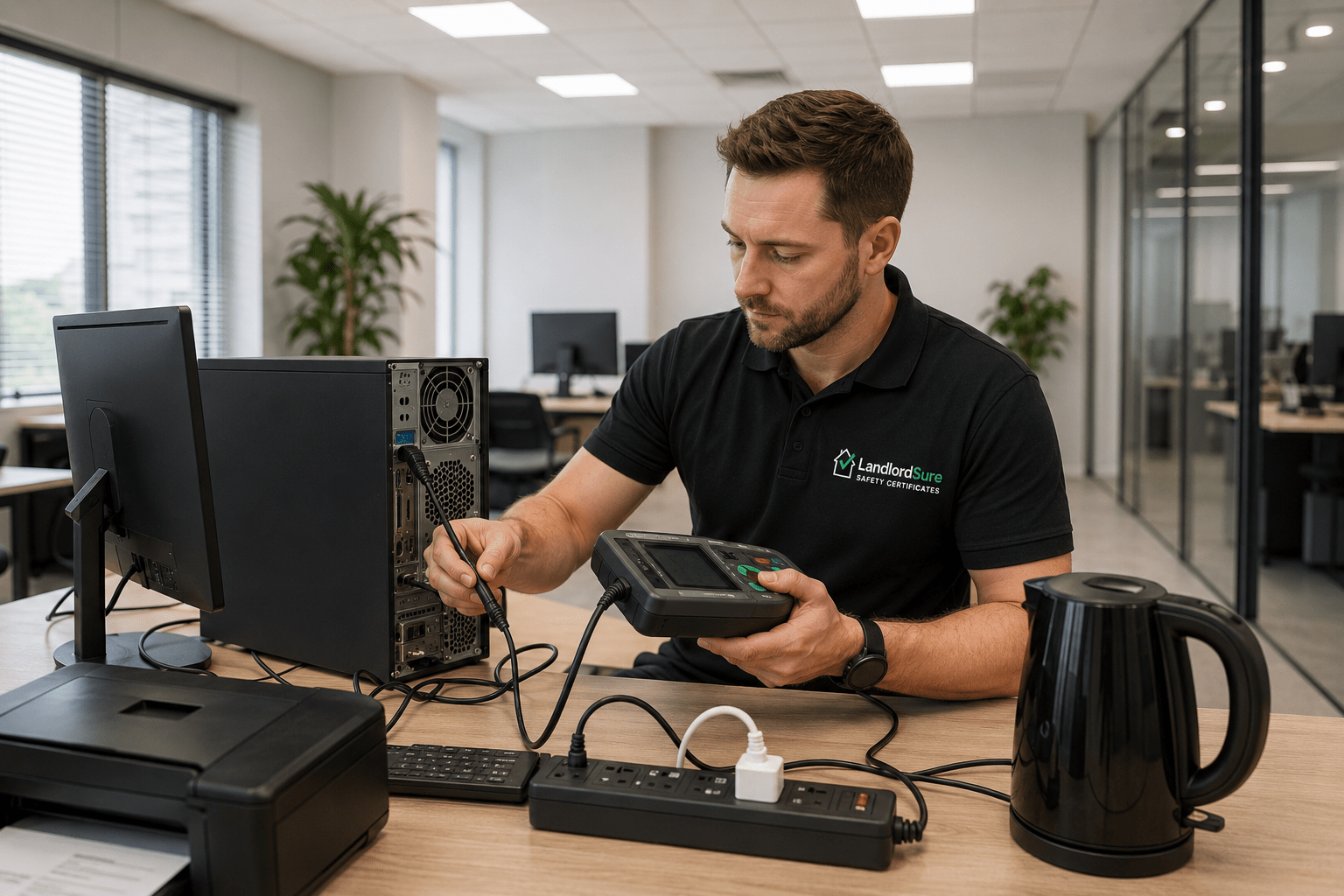
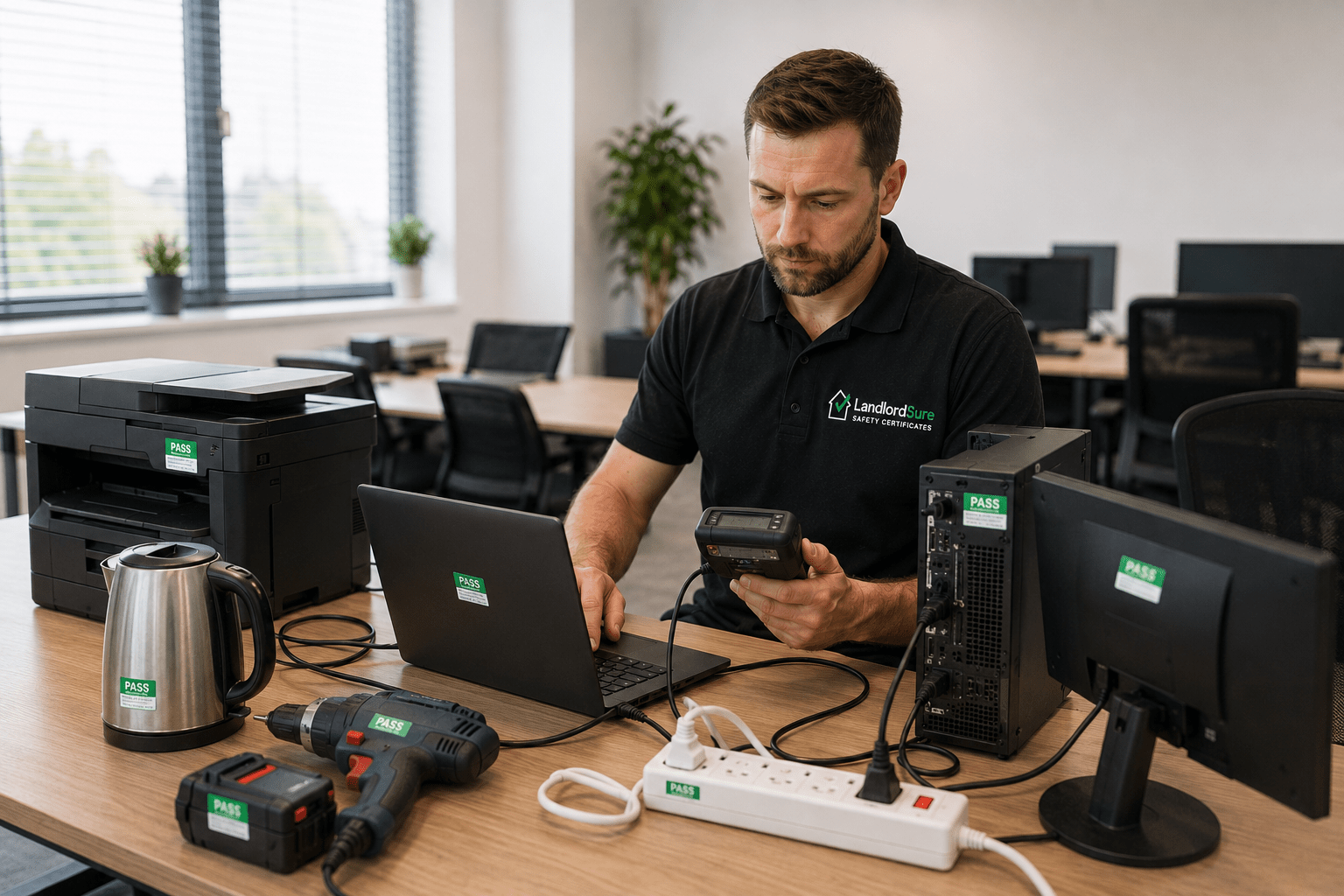
Portable Appliance Testing (PAT) from Landlord Sure helps ensure that portable electrical appliances are safe to use and comply with workplace safety requirements. Our qualified engineers inspect and test appliances such as computers, kettles, printers, extension leads, power tools, kitchen equipment, and other portable electrical devices using calibrated testing equipment.
Portable appliance testing helps you show that the appliances in your property are safe to use. Our portable appliance testing covers items such as kettles, lamps, heaters and office equipment, and you can read the HSE guidance on portable appliance testing for more detail. Book portable appliance testing with Landlord Sure today.
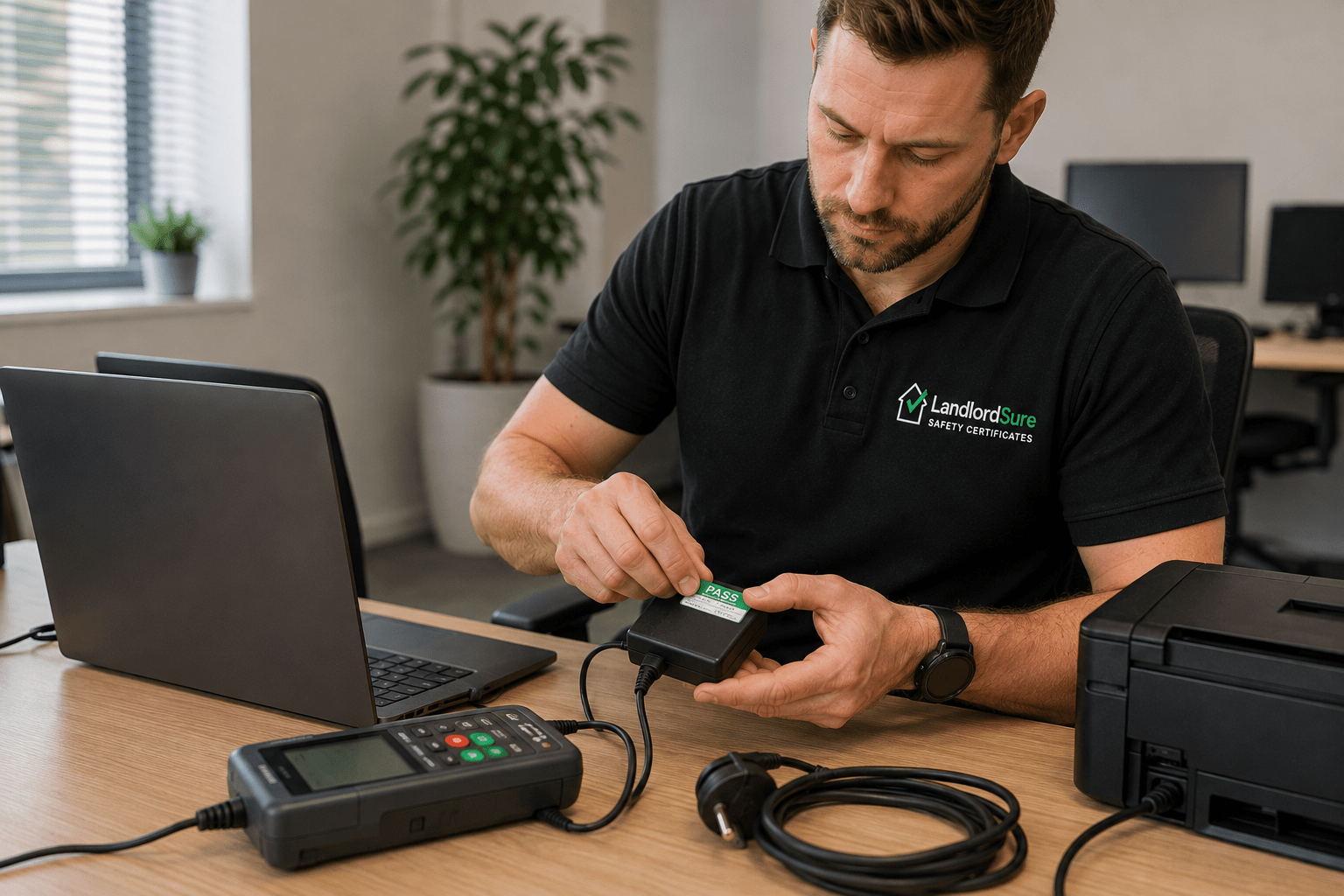
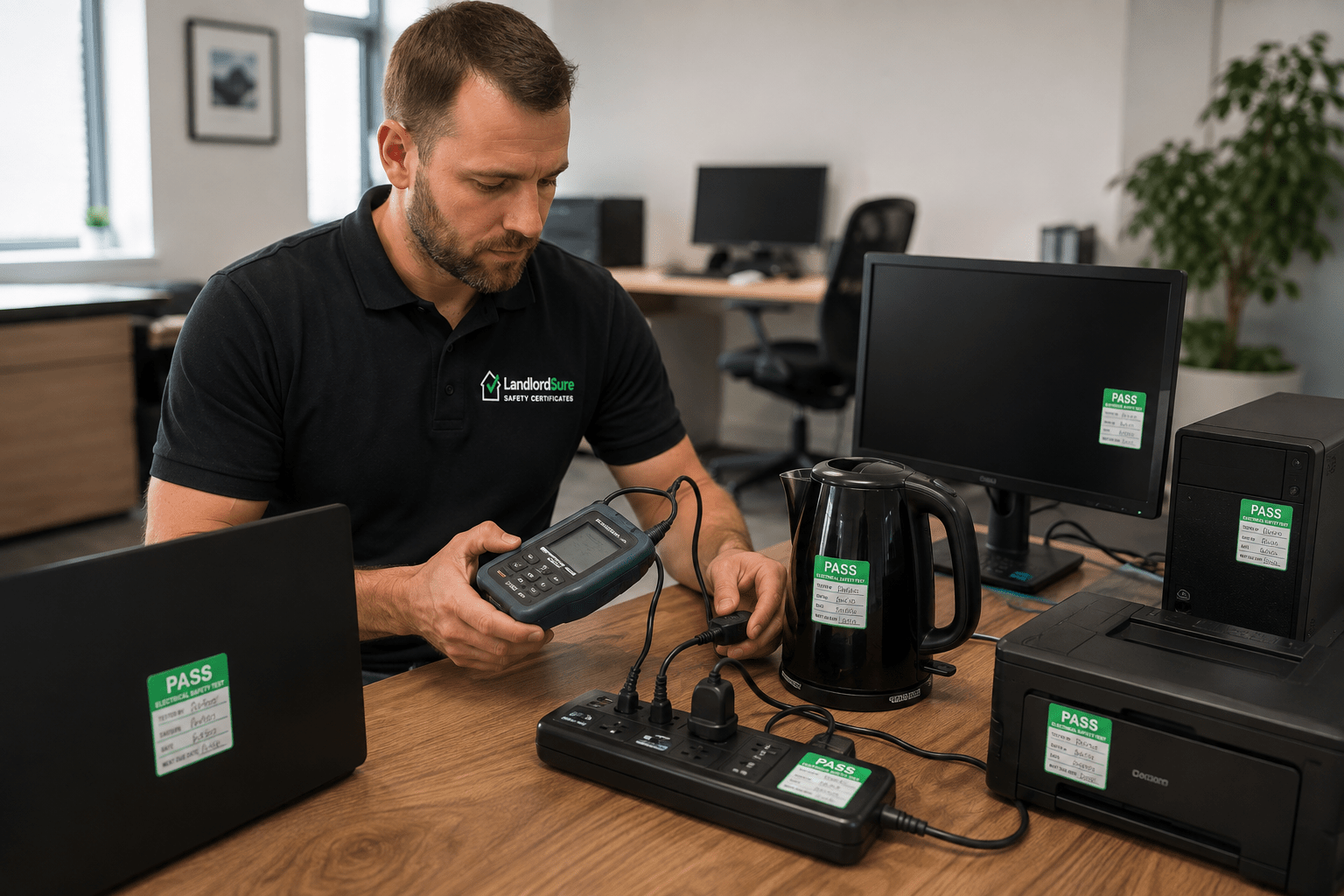
Every appliance is visually inspected, electrically tested, and clearly labelled with its pass or fail status. You’ll receive a comprehensive digital PAT Test Report detailing all tested appliances, helping businesses, landlords, schools, offices, retail premises, and commercial properties maintain a safe working environment and demonstrate compliance with electrical safety best practices.
Ideal for small offices, landlords, and businesses with up to 10 portable electrical appliances.
£54.99
- Up to 10 Portable Appliances
- Visual & Electrical Safety Testing
- Pass/Fail Appliance Labelling
- Digital PAT Test Report
- Qualified & Competent Engineers
Portable Appliance Testing (PAT)
At Landlord Sure, our Portable Appliance Testing (PAT) service helps ensure your portable electrical equipment is safe, reliable, and compliant with workplace safety requirements. We inspect and test appliances including computers, monitors, printers, kettles, extension leads, power tools, and office equipment using professional PAT testing equipment.
Each appliance undergoes a thorough visual inspection and electrical safety test before receiving a pass or fail label. You’ll receive a comprehensive digital PAT Test Report, providing a clear record of all tested equipment. Whether you’re a landlord, office, retail business, school, or commercial property owner, our qualified engineers deliver fast, reliable PAT testing to help maintain a safe working environment.
Why Choose Landlord Sure for PAT Testing?
At Landlord Sure, we provide fast, reliable, and professional Portable Appliance Testing (PAT) services to help landlords, businesses, offices, schools, retail premises, and commercial properties maintain safe electrical equipment. Our qualified engineers use calibrated PAT testing equipment to inspect and test portable appliances with minimal disruption to your daily operations.
Every appliance is visually inspected, electrically tested, and clearly labelled with its pass or fail status. You’ll receive a detailed digital PAT Test Report, making it easy to demonstrate compliance, manage maintenance records, and keep your workplace electrically safe. With competitive pricing, flexible appointments, and nationwide coverage, Landlord Sure is your trusted partner for professional PAT testing.
What's Included in Our PAT Testing Service?
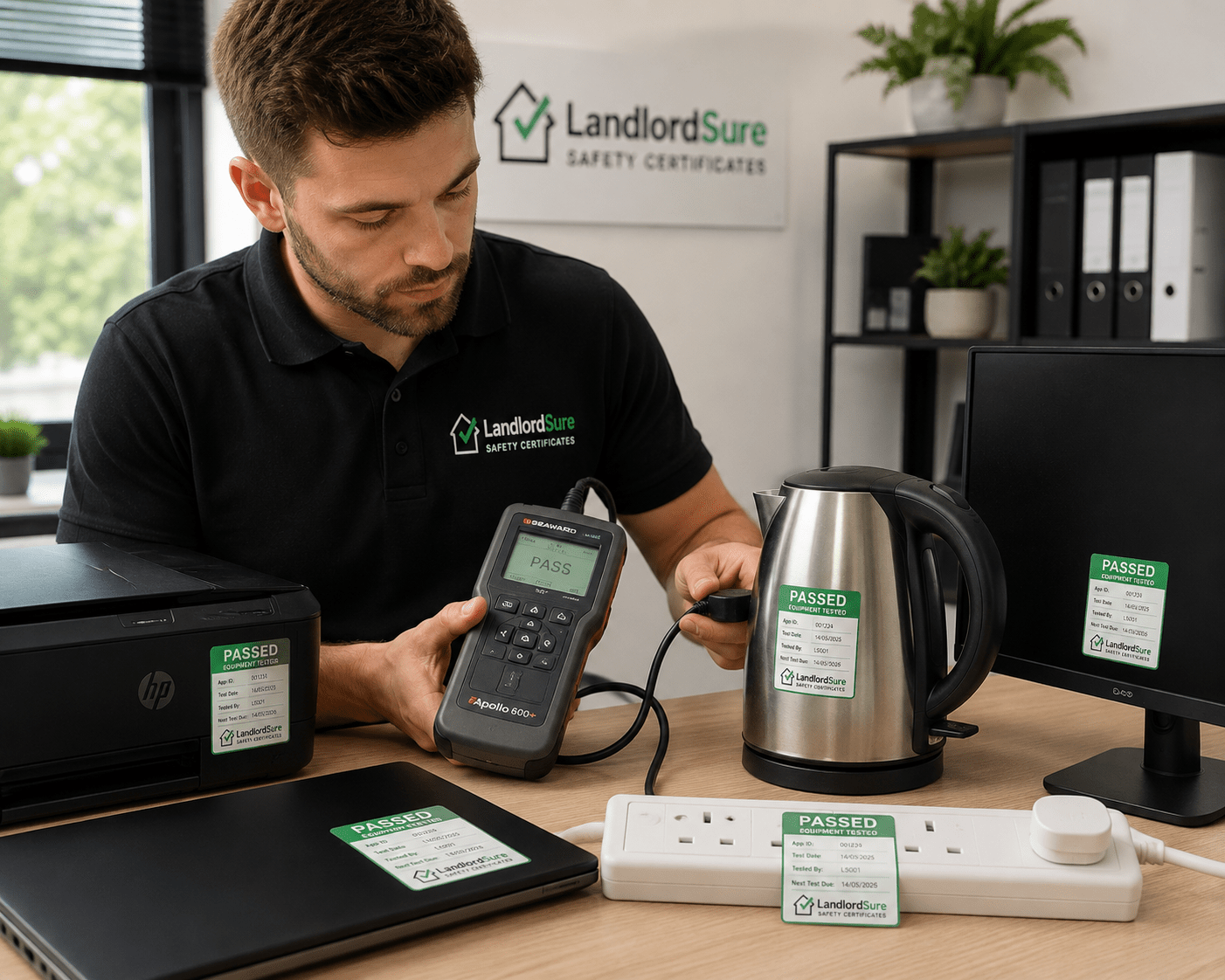
At Landlord Sure, our Portable Appliance Testing (PAT) service is designed to help businesses, landlords, schools, offices, and commercial premises ensure their portable electrical equipment remains safe to use. Our qualified engineers inspect and test appliances such as computers, monitors, printers, extension leads, kettles, microwaves, power tools, chargers, and other portable electrical devices using calibrated PAT testing equipment.
Every appliance undergoes a thorough visual inspection and electrical safety test before being clearly labelled with a Pass or Fail sticker. Once testing is complete, you’ll receive a detailed digital PAT Test Report listing all tested appliances, their results, and any recommendations. With professional reporting, fast turnaround, and minimal disruption to your workplace, Landlord Sure makes PAT testing simple, reliable, and fully compliant with workplace electrical safety best practices.
Keep Your Workplace Safe with Professional PAT Testing
A Portable Appliance Testing (PAT) service from Landlord Sure helps ensure your portable electrical equipment is safe, reliable, and suitable for continued use. Our qualified engineers inspect and test appliances including computers, printers, kettles, extension leads, chargers, power tools, and office equipment to identify electrical faults, damaged cables, and potential safety hazards before they become serious risks.
Whether you’re a landlord, office manager, school, retail business, or commercial property owner, our PAT testing service provides clear digital reports, pass/fail appliance labelling, and expert recommendations where required. With experienced engineers, fast turnaround, transparent pricing, and nationwide coverage, Landlord Sure makes workplace electrical safety simple, efficient, and hassle-free.
How We Deliver Your PAT Testing Fast, Professional & Fully Compliant
From booking your inspection to receiving your certificate, we make the entire process simple, transparent, and hassle-free.

Book Your Inspection
Schedule your inspection online or by phone at a time that suits you. We offer flexible appointments across London.
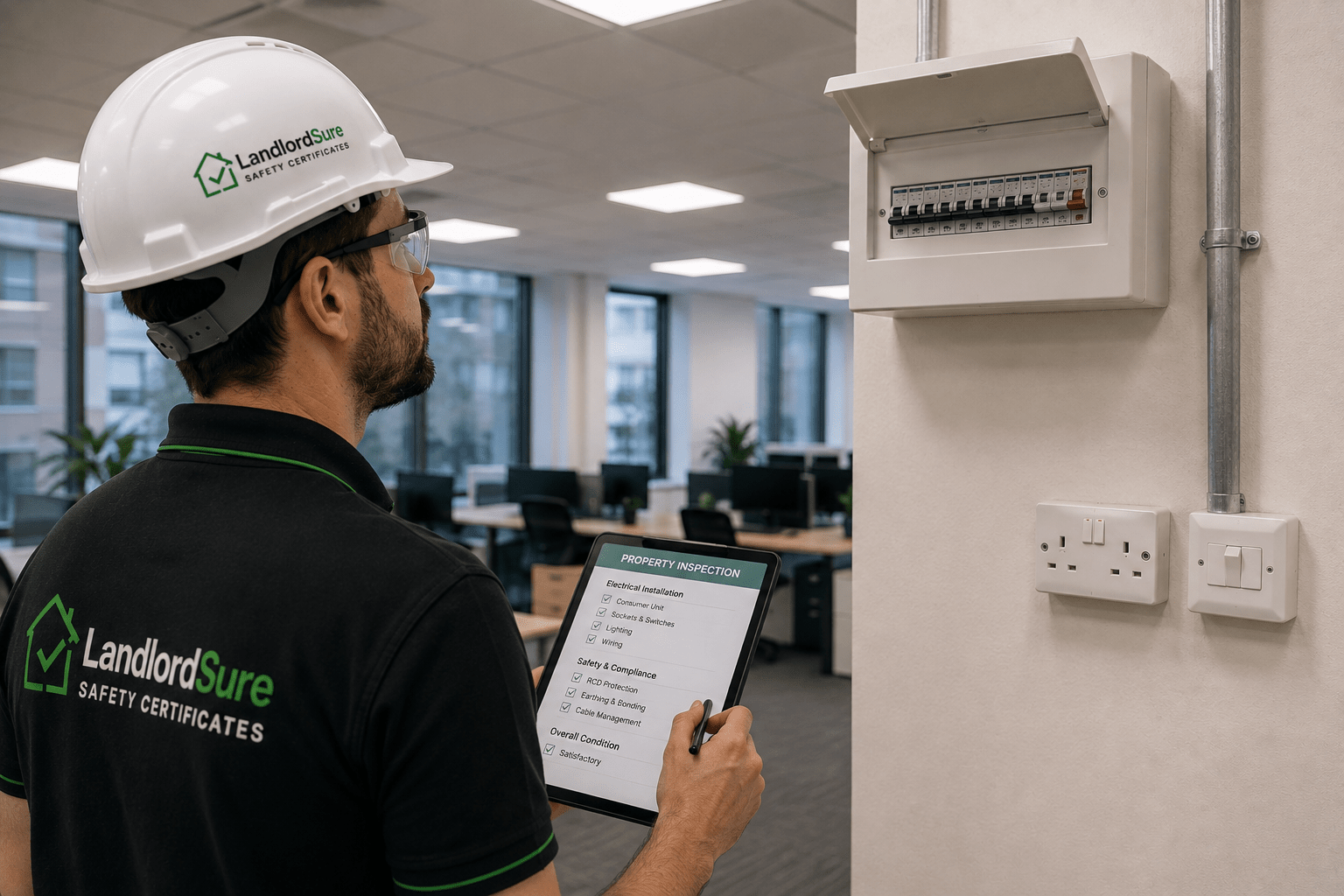
Property Inspection
Our qualified engineer visits your property to inspect and test your portable electrical appliances, labelling each item with its pass or fail result.

Receive Your Certificate
You’ll receive a detailed digital report within 24 hours, including observations, recommendations, and compliance status.
What Is PAT Testing?
PAT testing, short for Portable Appliance Testing, is the routine inspection and testing of electrical equipment that plugs into a socket. It checks that appliances, plugs, leads and fuses are safe to use. Each item is given a visual inspection and, where needed, electrical tests such as earth continuity and insulation resistance. It is then labelled pass or fail, and the results are recorded in a digital report.
How Much Does PAT Testing Cost in London?
Our PAT testing starts from £54.99 for up to 10 portable appliances, including pass or fail labels and a digital PAT test report. This suits most rented flats and houses, small offices and shops. For larger numbers of appliances, such as offices, HMOs and multi-unit portfolios, contact us for a quote based on the number of items.
Which Appliances Need PAT Testing?
| Type | Examples |
|---|---|
| Kitchen appliances | Kettles, toasters, microwaves, fridges and washing machines supplied with the property |
| Household items | Lamps, heaters, fans, vacuum cleaners, irons and hairdryers |
| IT and office equipment | Computers, monitors, printers, chargers and power supplies |
| Leads and adaptors | Extension leads, kettle leads and multi-way adaptors |
In rented homes, only appliances supplied by the landlord need testing. Tenants are responsible for their own items.
Is PAT Testing a Legal Requirement?
No law names PAT testing as compulsory. However, the Electricity at Work Regulations 1989 require employers to keep electrical equipment safe, and landlords must make sure any appliances they supply are safe at the start of a tenancy and throughout it. PAT testing is the most common way to show you have met these duties. Many HMO licences and insurers also ask for a current PAT record.
How Often Should PAT Testing Be Done?
There is no fixed legal interval. How often you test should depend on the type of equipment and how and where it is used, following the IET Code of Practice for In-service Inspection and Testing of Electrical Equipment. As a general guide:
- Landlords: many test at the start of each new tenancy and then every year, especially in HMOs and furnished lets
- Offices and shops: low-risk equipment is often tested every one to four years, with regular user checks in between
- Hotels, kitchens and busy shared spaces: usually more frequent testing, as equipment is used more heavily
For more detail, read our guide to PAT testing for landlords.
Frequently Asked Questions About PAT Testing
Get answers to the most common questions about PAT testing, landlord responsibilities, how often appliances should be tested, pricing and what is included in your report.

What is PAT testing?
PAT testing (Portable Appliance Testing) is the visual inspection and electrical testing of equipment that plugs into a socket, such as kettles, microwaves, lamps, extension leads and IT equipment. Each item is labelled pass or fail and recorded in a digital PAT test report.
Is PAT testing a legal requirement?
No law names PAT testing as compulsory, but employers must keep electrical equipment safe under the Electricity at Work Regulations 1989, and landlords must make sure any appliances they supply are safe. PAT testing is the usual way to show you have met these duties, and many HMO licences and insurers ask for it.
How often should PAT testing be done?
There is no fixed legal interval. It depends on the type of equipment and how it is used. Many landlords test at the start of each tenancy and then yearly, while low-risk office equipment is often tested every one to four years.
Which appliances need PAT testing?
Any portable electrical item supplied by the landlord or business, including kitchen appliances, heaters, lamps, vacuum cleaners, computers, chargers, extension leads and kettle leads. Tenants’ own appliances are their responsibility.
How long does PAT testing take?
Each appliance usually takes a few minutes to inspect and test. A typical rented flat or small office with up to 10 appliances can normally be completed in a single short visit.
What happens if an appliance fails?
A failed item is labelled FAIL, recorded in your report with the reason, and should be taken out of use straight away. It can then be repaired or replaced, and retested before it is used again.