
Emergency Light Certificate
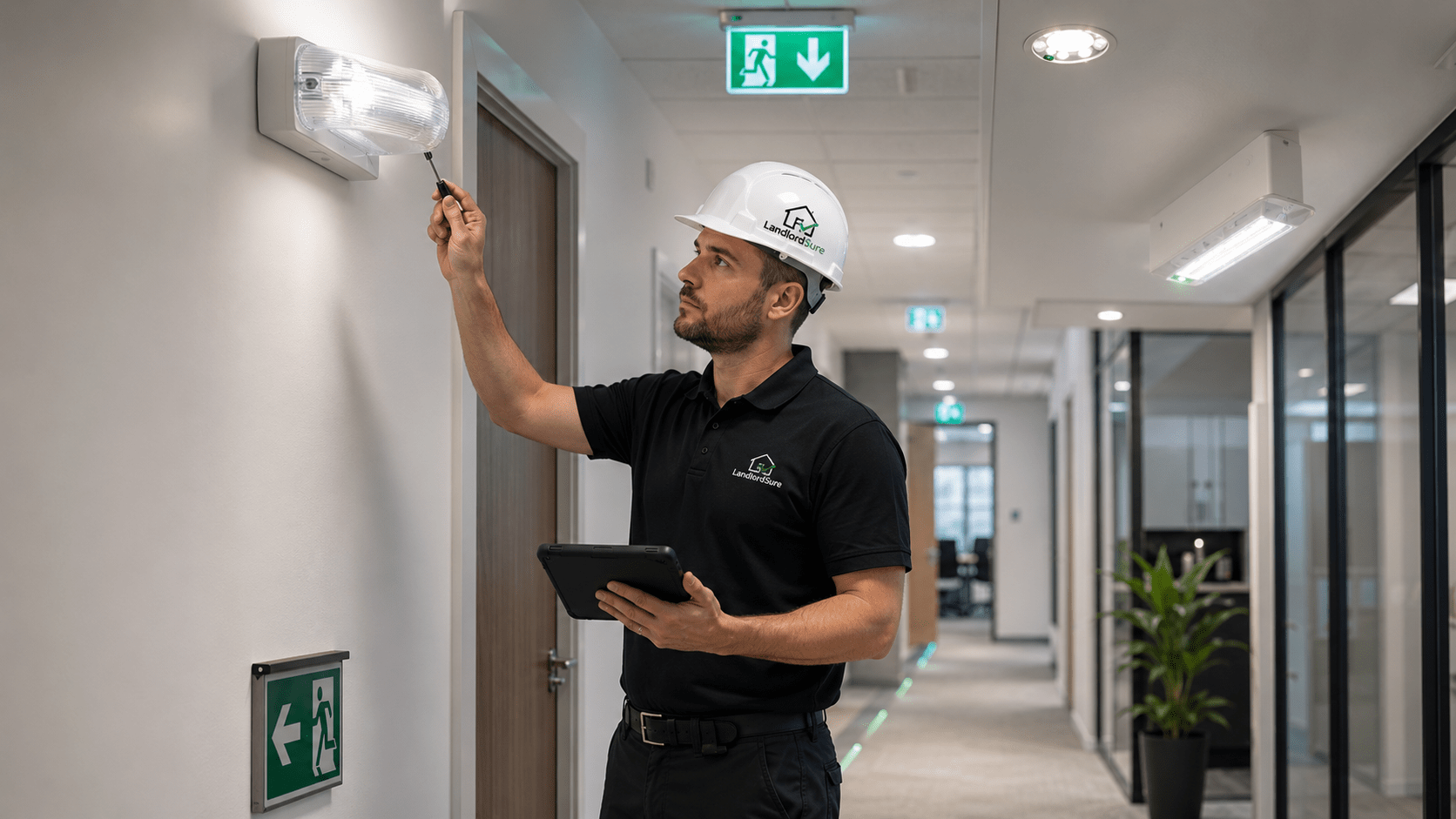
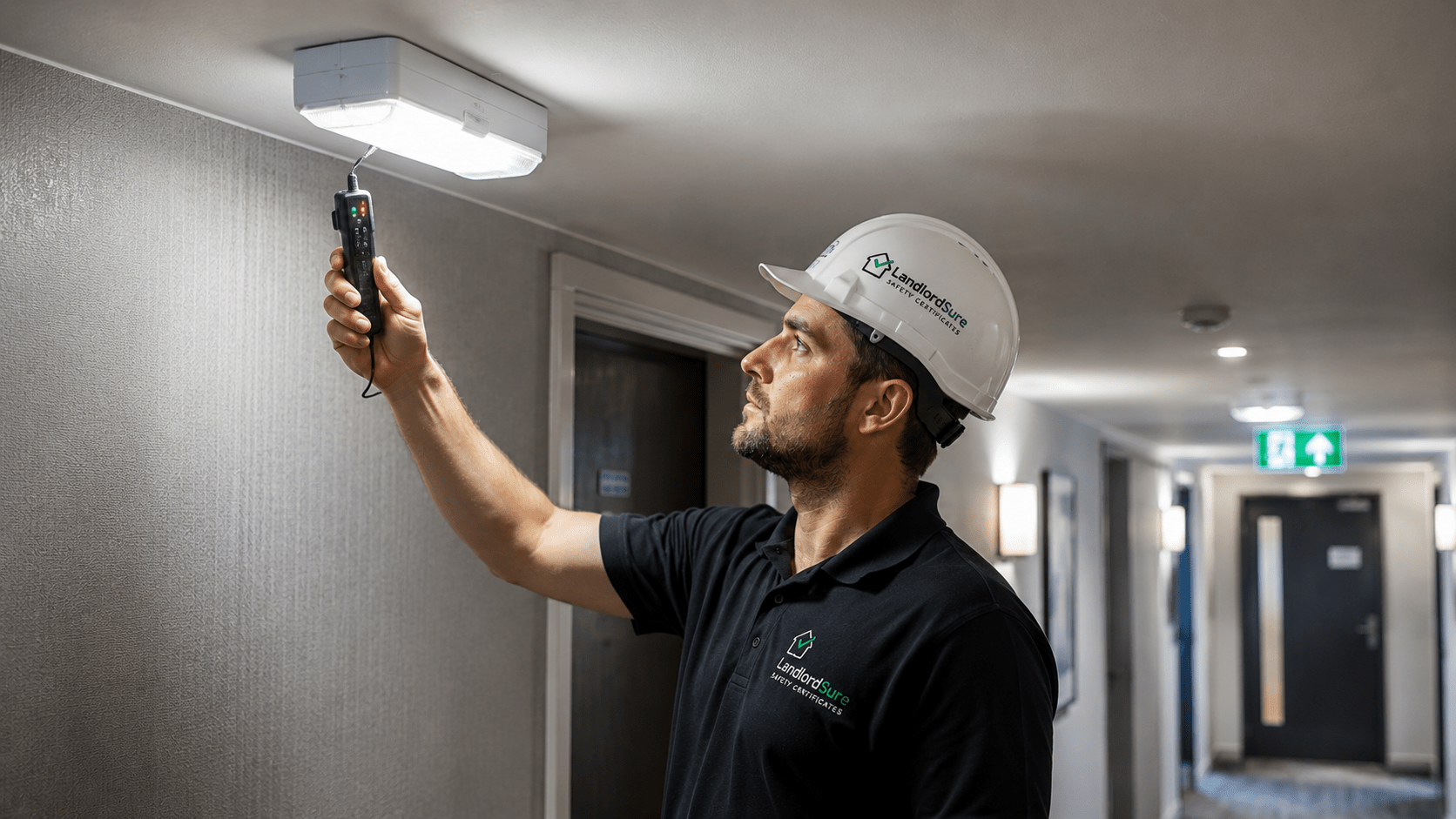
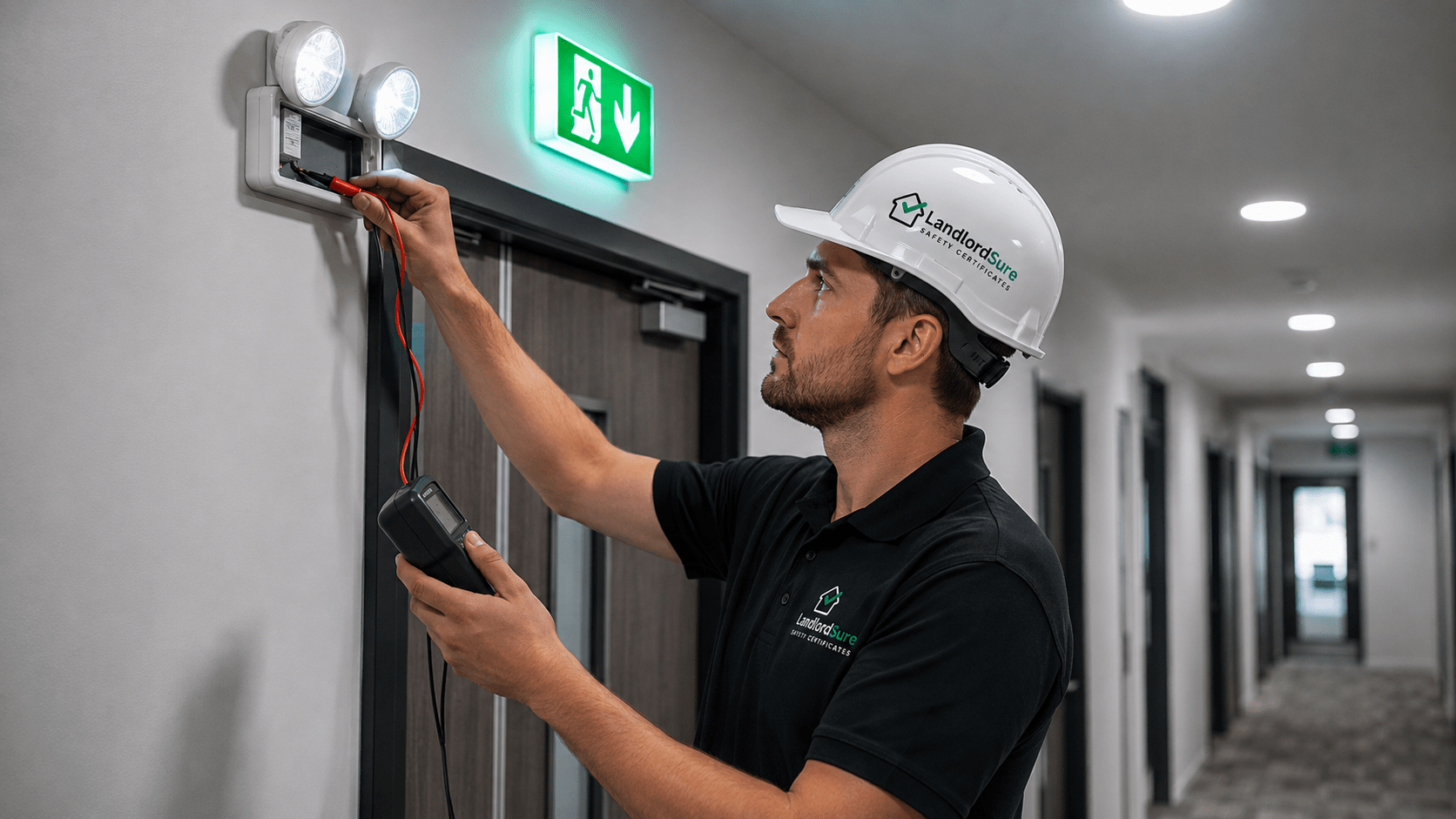
Landlord Sure’s Emergency Light Testing service helps ensure your emergency lighting systems operate correctly during a power failure, providing safe evacuation routes and helping your property remain compliant with current UK fire safety regulations. Our qualified engineers thoroughly inspect and test all emergency lighting units, exit signs, battery backup systems, and illumination levels to confirm they perform as required in an emergency.
Emergency Light Certificate for London Properties
An emergency light certificate shows that the emergency lighting in your building has been tested and works as it should. Landlord Sure provides an emergency light certificate for landlords, managers and businesses across London. Every emergency light certificate we issue is clear and easy to follow.
Why You Need an Emergency Light Certificate
Emergency lights guide people to safety if the main power fails. A valid emergency light certificate records the test results and any faults found, which helps you show that you have met your fire safety duties. Read the London Fire Brigade guide to workplace fire safety to understand your responsibilities.
Book Your Emergency Light Certificate
To arrange an emergency light certificate, contact Landlord Sure or use our online booking form. We test your emergency lighting and issue a clear emergency light certificate for your records.
Whether you’re a landlord, letting agent, business owner, property manager, or facilities manager, our comprehensive emergency lighting inspections identify faults, battery failures, damaged fittings, and non-compliant installations before they become a safety risk. Following the inspection, you’ll receive a detailed digital report with clear recommendations, helping you maintain compliance while protecting occupants and your property.
- BS 5266 Compliant Emergency Lighting Testing
- Battery Backup & Duration Performance Testing
- Digital Inspection Report Within 24 Hours
Residential ELC Pricing
Ideal for small flats, maisonettes and smaller residential properties.
£60
- Emergency Light Function Testing
- Battery Backup Inspection
- Digital Inspection Report
- Qualified Engineer
- BS 5266 Compliance Check
Suitable for larger flats, houses and small HMOs with communal lighting.
£84
- Emergency Light Function Testing
- Battery Backup Inspection
- Digital Inspection Report
- Qualified Engineer
- BS 5266 Compliance Check
Designed for HMOs and residential blocks with shared hallways and stairwells.
£120
- Emergency Light Function Testing
- Battery Backup Inspection
- Digital Inspection Report
- Qualified Engineer
- BS 5266 Compliance Check
For larger residential blocks and multi-occupancy buildings with extensive communal areas.
£165
- Emergency Light Function Testing
- Battery Backup Inspection
- Digital Inspection Report
- Qualified Engineer
- BS 5266 Compliance Check
Each additional emergency light over 12 units is tested and certified at £17 per light.
£17/light
- Emergency Light Function Testing
- Battery Backup Inspection
- Digital Inspection Report
- Qualified Engineer
- BS 5266 Compliance Check
Commercial ELC Pricing
Ideal for small offices, retail units, cafés and clinics with a few emergency lights.
£60
- Emergency Light Function Testing
- Battery Backup Inspection
- Digital Inspection Report
- Qualified Engineer
- BS 5266 Compliance Check
Suitable for shops, offices and small commercial premises.
£84
- Emergency Light Function Testing
- Battery Backup Inspection
- Digital Inspection Report
- Qualified Engineer
- BS 5266 Compliance Check
Perfect for offices, schools, restaurants and medium-sized commercial properties.
£120
- Emergency Light Function Testing
- Battery Backup Inspection
- Digital Inspection Report
- Qualified Engineer
- BS 5266 Compliance Check
Designed for larger commercial buildings, warehouses, hotels and healthcare facilities.
£165
- Emergency Light Function Testing
- Battery Backup Inspection
- Digital Inspection Report
- Qualified Engineer
- BS 5266 Compliance Check
Pricing covers up to 12 lights. Each additional light is tested at £17 per unit.
£17/light
- Emergency Light Function Testing
- Battery Backup Inspection
- Digital Inspection Report
- Qualified Engineer
- BS 5266 Compliance Check
Types of Emergency Lighting We Test
At Landlord Sure, our Emergency Light Testing service covers a wide range of emergency lighting systems to ensure they operate correctly during a power failure and comply with BS 5266. Our qualified engineers inspect every emergency lighting unit, verify battery backup performance, and confirm that escape routes remain safely illuminated when normal lighting fails.
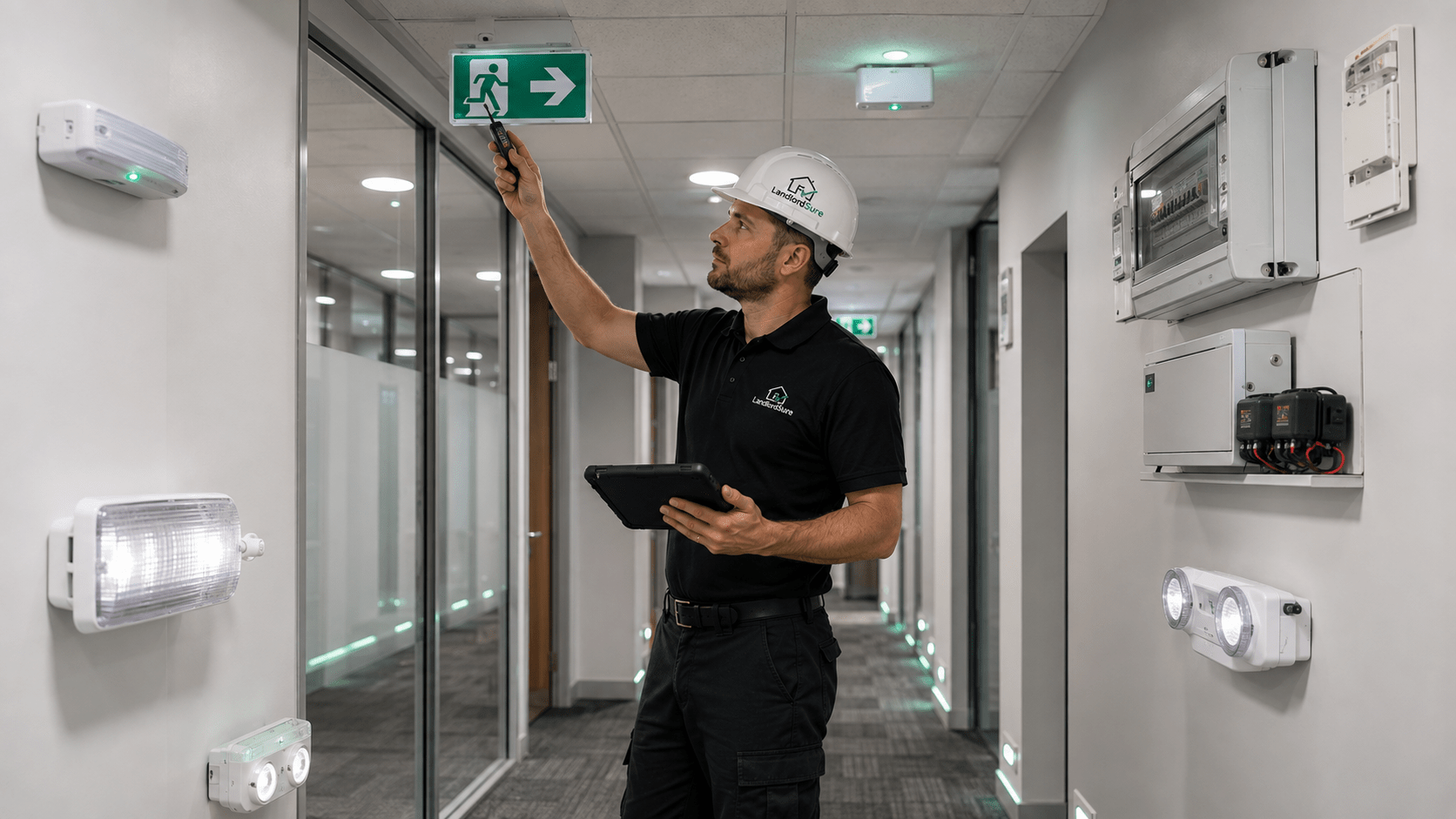
We professionally test maintained emergency lights, non-maintained emergency lights, illuminated exit signs, emergency bulkhead lights, emergency downlights, and escape route lighting installed throughout residential and commercial properties. Every inspection includes a thorough visual assessment, functional testing, battery duration checks, and compliance verification to ensure your emergency lighting system performs reliably in an emergency.
Whether your property is a house, HMO, apartment block, office, warehouse, retail unit, school, hotel, or healthcare facility, Landlord Sure provides detailed digital inspection reports with clear recommendations, helping you maintain legal compliance while protecting occupants and ensuring safe evacuation routes at all times.
What's Included in Our Emergency Light Testing
At Landlord Sure, our Emergency Light Testing service provides a comprehensive inspection of your emergency lighting system to ensure it operates correctly during a power failure and complies with BS 5266 standards. Our qualified engineers carry out thorough functional and duration testing, inspect battery backup performance, and verify that emergency escape routes remain safely illuminated.
Every inspection includes a detailed assessment of emergency light fittings, illuminated exit signs, bulkhead lights, maintained and non-maintained emergency lights, together with a visual inspection of the overall system. Once testing is complete, you’ll receive a professional digital inspection report outlining the condition of your emergency lighting installation, any identified faults, and recommendations to help you maintain compliance and occupant safety.
Residential vs Commercial Emergency Lighting
We provide professional Emergency Light Testing services for both residential and commercial properties, ensuring every emergency lighting system complies with BS 5266 and operates reliably during a power failure. While the purpose of emergency lighting is the same—protecting occupants and providing safe evacuation routes—the inspection requirements vary depending on the property type.
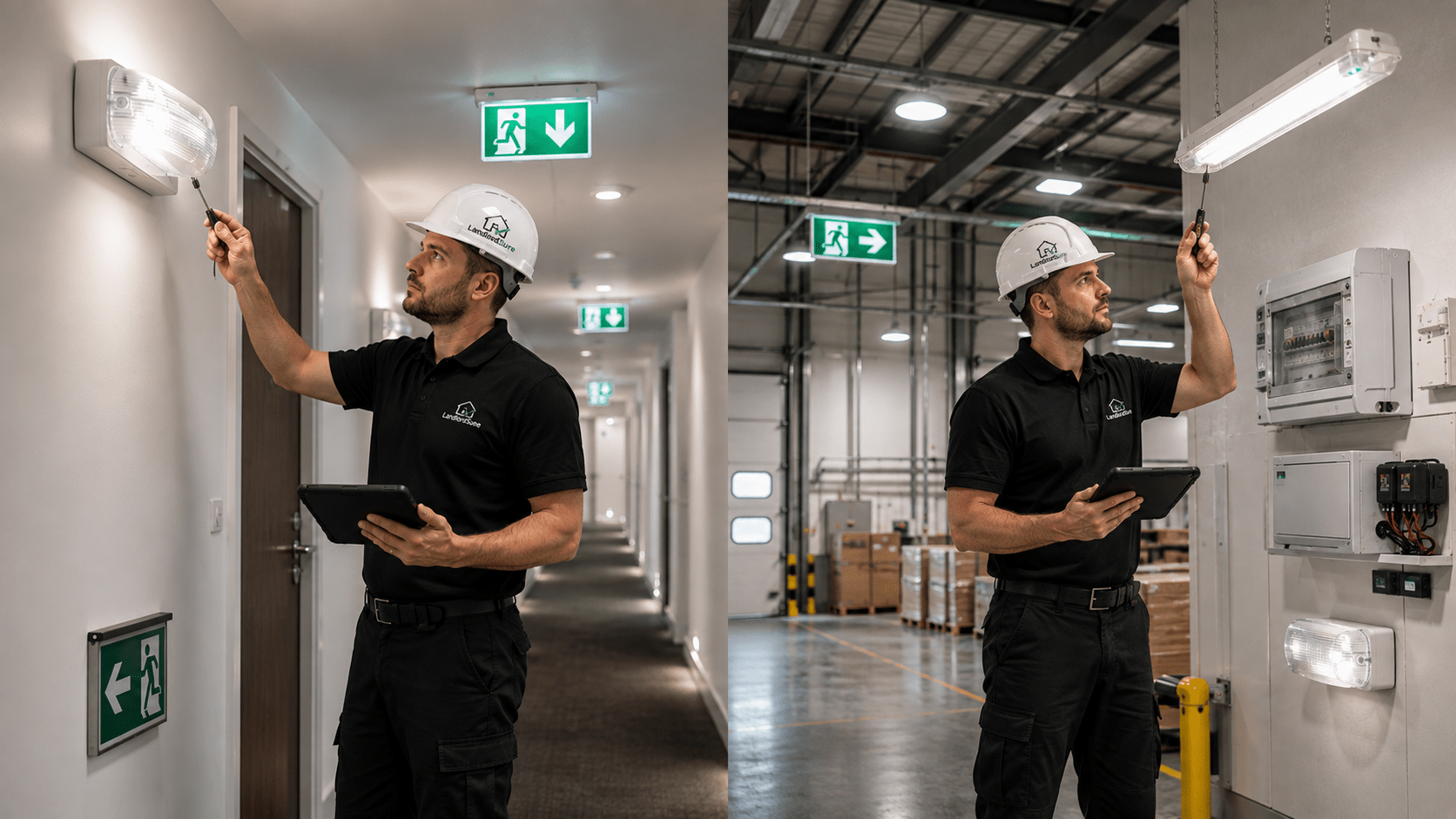
For residential properties, our engineers inspect emergency lighting installed in communal areas such as apartment blocks, HMOs, residential buildings, and shared escape routes. For commercial properties, we carry out more comprehensive testing of emergency lighting systems across offices, warehouses, retail units, schools, healthcare facilities, hotels, factories, and other workplaces where larger occupancy and more complex evacuation routes require enhanced compliance.
How We Deliver Your Emergency Light Testing Fast, Professional & Fully Compliant
From booking your inspection to receiving your digital compliance report, we make the entire Emergency Light Testing process simple, efficient, and fully compliant with BS 5266.
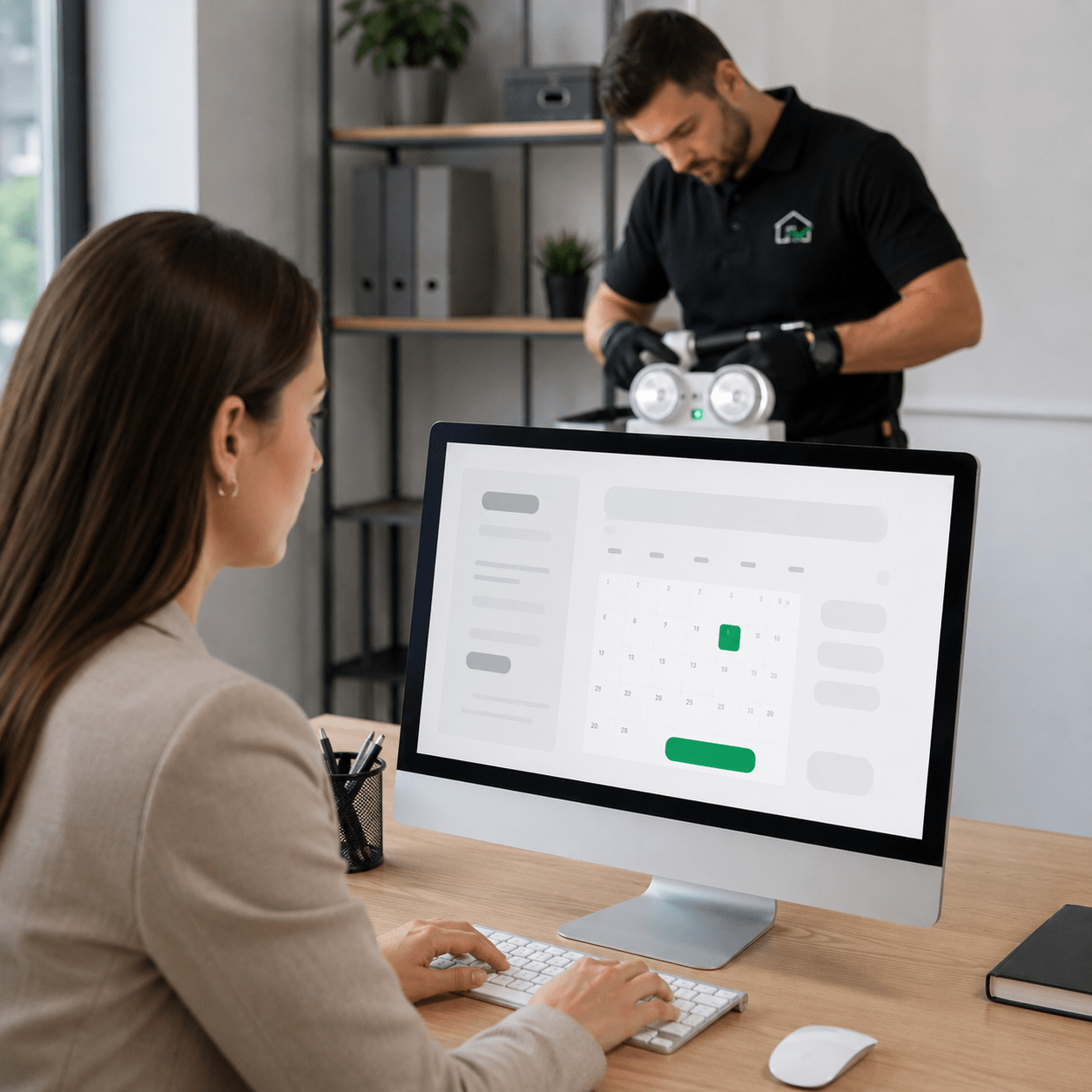
Book Your Inspection
Schedule your Emergency Light Testing appointment online or by phone at a time that suits you. Our team will arrange a qualified engineer to visit your property promptly for a professional inspection.
Property Inspection
Our qualified engineer visits your property to test your emergency lighting system, checking each fitting, battery duration and compliance with BS 5266.

Receive Your Certificate
Once testing is complete, you’ll receive a detailed digital Emergency Light Testing report outlining the condition of your emergency lighting system, any identified faults, compliance status, and professional recommendations.
What Is an Emergency Lighting Certificate?
An emergency lighting certificate is the written record that your emergency lights have been inspected and tested by a competent person in line with BS 5266-1, the British Standard for emergency lighting. It shows that escape routes, exits, stairways and other key areas will stay lit if the mains power fails, so people can leave the building safely.
Under the Regulatory Reform (Fire Safety) Order 2005, the responsible person for a building must make sure emergency lighting, where it is needed, is kept in good working order. A current certificate and an up-to-date log book are the main evidence that you have done this.
Types of Emergency Lighting Certificate
| Certificate | When it is issued |
|---|---|
| Installation or completion certificate | When a new emergency lighting system is designed and installed, or an existing system is significantly extended |
| Periodic inspection and test certificate | After the annual full-duration test, confirming the system still works and meets the standard |
| Log book entries | After each monthly function test and any faults, repairs or changes to the system |
Most landlords and businesses need the periodic inspection and test certificate each year, supported by monthly log book records.
What Does the Certificate Include?
- the property address and the areas covered
- the type of system, such as maintained, non-maintained or central battery
- the number and location of emergency luminaires and exit signs tested
- results of the full-duration test, usually 3 hours for most premises
- any defects found, failed fittings and recommended remedial work
- the date of the test, the next test due date and the engineer's details
How Long Does an Emergency Lighting Certificate Last?
A periodic emergency lighting certificate normally covers 12 months, because BS 5266-1 recommends a full rated-duration test every year. Between annual tests, a short monthly function test should be carried out and recorded in the log book to check that each light switches on when the mains supply is interrupted.
You should also arrange a new test after alterations to the building or the lighting, after repairs, or if your fire risk assessment, insurer or local council asks for one. For a step-by-step guide to monthly and annual checks, read emergency lighting testing: how often and how to test.
Who Can Issue an Emergency Lighting Certificate?
The certificate should be issued by a competent person with the right training and test equipment, usually a qualified electrician or fire safety engineer. Monthly function tests can be carried out by a trained member of staff or a managing agent, but the annual full-duration test and certificate should be completed by a professional.
Emergency Lighting Log Books
Alongside the certificate, BS 5266-1 expects you to keep a log book. It should record the monthly tests, the annual test, any faults found, repairs carried out and changes to the system. Keep the log book on site and available for the fire service, your insurer or a fire risk assessor. We record our test results clearly, so updating your log book after each visit is quick and simple.
Which Properties Need Emergency Lighting?
Emergency lighting is usually needed where people would struggle to escape in the dark, including:
- HMOs and blocks of flats with shared stairways and corridors
- offices, shops, restaurants and other workplaces
- hotels, guest houses and serviced accommodation
- warehouses, schools and buildings open to the public
Your fire risk assessment should confirm whether emergency lighting is needed and where it must be installed.
Frequently Asked Questions About Emergency Light Testing
Get answers to the most common questions about Emergency Light Testing, BS 5266 compliance, inspection requirements, emergency lighting maintenance, digital reports, and legal responsibilities for residential and commercial properties.

What is an Emergency Light Test?
An emergency light test checks that emergency lighting systems are operating correctly and will provide adequate illumination if the normal power supply fails. The test helps ensure escape routes, exits and other designated areas remain safely illuminated during an emergency.
How often should Emergency Lights be tested?
Emergency lighting should be checked regularly in accordance with the applicable testing and maintenance requirements. A brief functional test is generally carried out at regular intervals, with a full-duration test typically carried out annually. Records of testing should be maintained.
What does an Emergency Light Test include?
An emergency light test typically includes checking emergency luminaires, batteries, charging indicators, illuminated exit signs and the operation of the system under simulated mains failure conditions. The condition, positioning and visibility of emergency lighting are also assessed.
How long does Emergency Light Testing take?
The duration depends on the size and complexity of the property and the number of emergency lights installed. A routine inspection can be relatively quick, while a full-duration test may require the emergency lighting system to operate for its specified rated duration.
What happens if my Emergency Lights fail the inspection?
If an emergency light fails the inspection, the fault should be recorded and appropriate remedial work recommended. This may include replacing batteries, lamps or complete fittings, repairing wiring or correcting other defects. Failed emergency lighting should be rectified as soon as reasonably practicable to maintain adequate emergency illumination.