


Legionella Risk Assessment
A Legionella Risk Assessment from Landlord Sure helps identify and evaluate potential risks associated with Legionella bacteria and water systems within residential and commercial properties. Our competent assessors review relevant water systems, storage arrangements, outlets, temperatures, and other factors that may contribute to bacterial growth and exposure.
Landlords and employers have a duty to control the risk from legionella bacteria in water systems. You can read the HSE guidance on legionnaires disease and legionella to understand your responsibilities, then book a legionella risk assessment with Landlord Sure.
Whether you’re a landlord, property manager, letting agent, housing provider, or business owner, our assessment provides a structured review of your property’s water hygiene risks. Following the inspection, you receive a clear digital report outlining identified risks, findings, and practical control recommendations to help maintain safer water systems.
- Domestic & Commercial Water System Assessment
- Hot & Cold Water System Checks
- Temperature & Water Hygiene Assessment
Ideal for residential properties requiring a professional assessment of water-system risks.
£200
- Complete Legionella Risk Assessment
- Hot & Cold Water System Inspection
- Water Temperature Checks
- Storage & Distribution System Review
- Risk Identification & Control Recommendations
Legionella assessment
At Landlord Sure, our Legionella Risk Assessment service provides a structured evaluation of water systems to identify conditions that may contribute to Legionella growth and exposure. Our competent assessors review relevant hot and cold water systems, outlets, storage arrangements, temperatures, pipework, and other risk factors.
We assess the property’s water systems systematically and document relevant findings, including areas where temperatures, stagnation, storage, system design, or maintenance arrangements may require attention. The assessment is designed to provide landlords, property managers, and businesses with a clear understanding of identified water hygiene risks.
Following the assessment, we provide a detailed digital report outlining our findings and practical control recommendations, helping you maintain appropriate water hygiene management and reduce potential Legionella risks.
Common Legionella Risks We Identify
At Landlord Sure, our Legionella assessments are designed to identify conditions within water systems that could increase the risk of Legionella growth and exposure. Our competent assessors review relevant hot and cold water systems, storage arrangements, outlets, pipework, temperatures, and system usage.
During the assessment, we look for potential risk factors such as poor temperature control, stagnant or infrequently used outlets, inadequate water circulation, unsuitable storage, excessive pipe runs, faulty components, and areas where water systems may require improved management. Our findings are recorded clearly as part of the assessment.
Following the inspection, we provide a detailed digital report outlining identified risks, observations, and practical control recommendations. This helps landlords, property managers, housing providers, and businesses understand their water hygiene risks and take appropriate steps to maintain safer water systems.

We Assess Every Type of Property
At Landlord Sure, our Legionella assessment service is suitable for a wide range of residential properties across London and the UK. Whether you manage a single rental property or a larger portfolio, our competent assessors review the relevant hot and cold water systems, outlets, storage, temperatures, pipework, and water usage patterns.
Our assessment is tailored to the property’s water-system setup, helping identify conditions that could increase Legionella risk and providing clear recommendations for appropriate control measures. We provide straightforward digital reporting so landlords and property managers can easily understand the findings.
- Flats & Apartments
- HMOs (Houses in Multiple Occupation)
- Sheltered & Supported Housing

Professional Equipment for Accurate Legionella Assessments
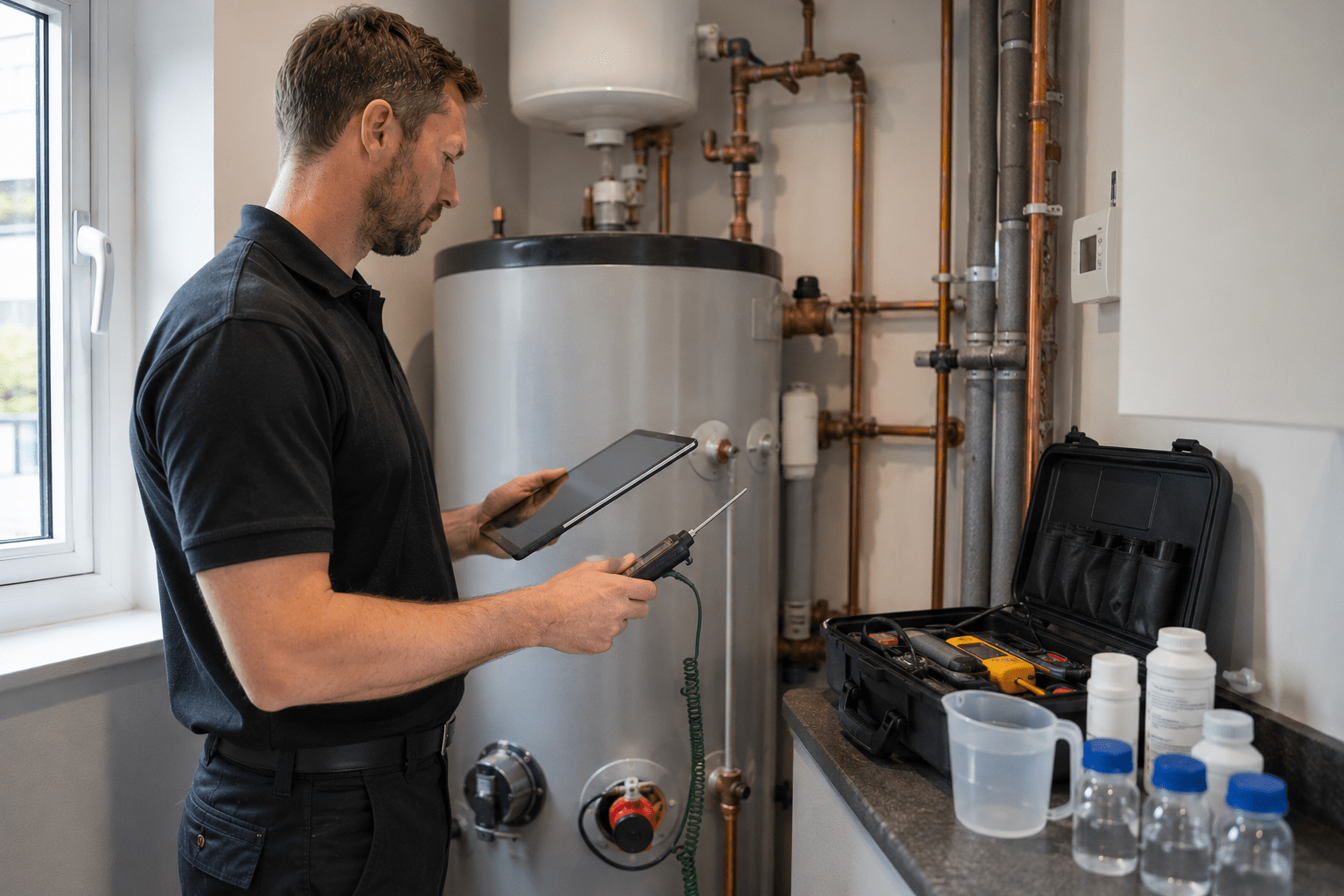
At Landlord Sure, we use professional inspection equipment and structured assessment methods to provide accurate and reliable Legionella assessments. Our competent assessors examine relevant water systems and identify conditions that could contribute to Legionella growth or exposure.
Our assessments can include checks of hot and cold water systems, storage tanks, cylinders, outlets, pipework, water temperatures, circulation, and thermostatic controls. Professional temperature measurement and inspection equipment allows us to record important findings accurately and identify areas requiring attention.
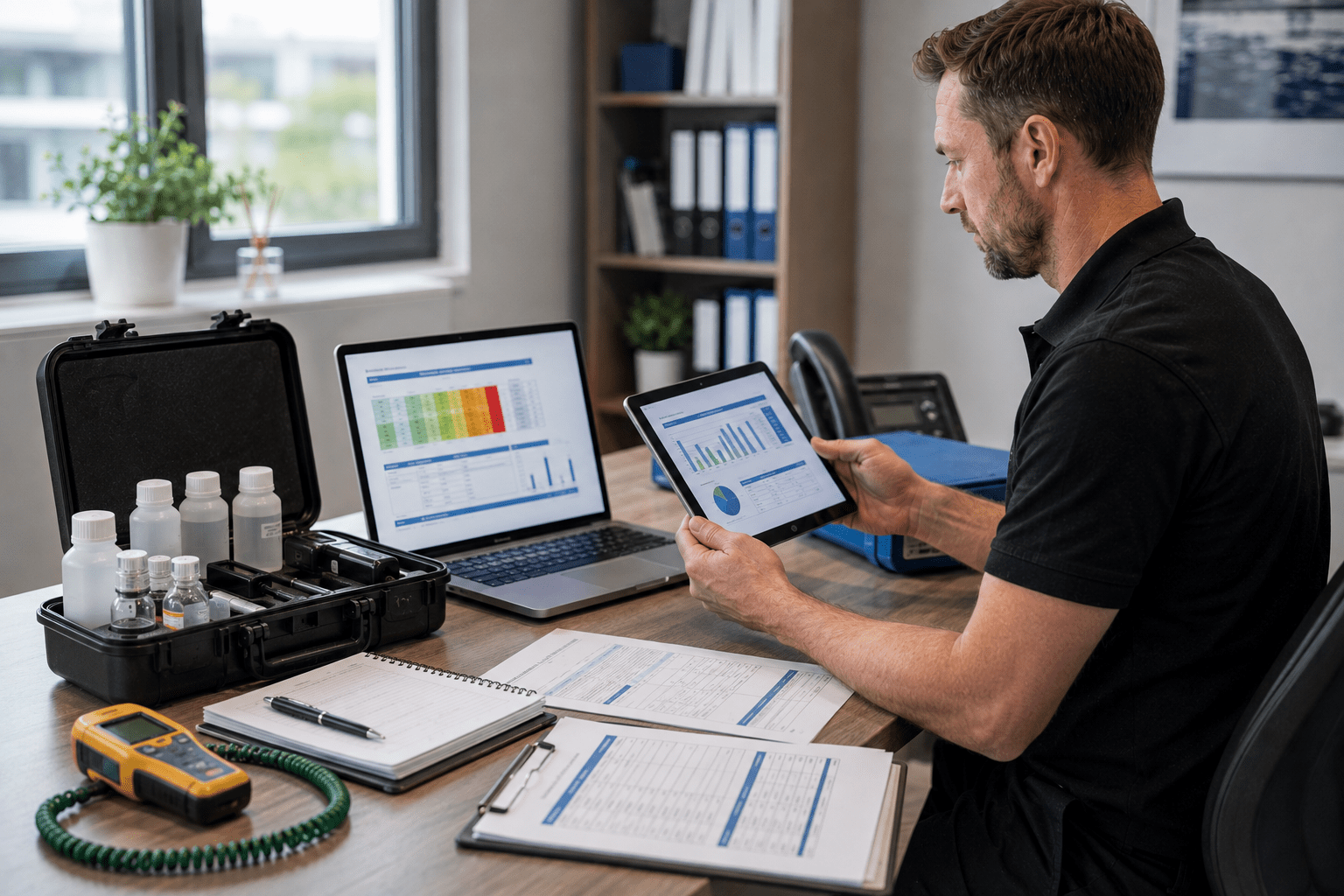
Every assessment is documented clearly, with relevant observations and practical control recommendations provided in a detailed digital report. This gives landlords, property managers, housing providers, and businesses a clear understanding of their water hygiene risks and the actions that may be required.

How We Deliver Your Legionella assessment Fast, Professional & Reliable
From booking your assessment to receiving your completed report, we make the entire process simple, transparent, and hassle-free.

Book Your Assessment
Arrange your Legionella assessment online or by phone at a convenient time. We offer flexible appointments for landlords, property managers, housing providers, and businesses.

Complete Your Water System Assessment
Our competent assessor visits your property to review relevant hot and cold water systems, storage, outlets, pipework, water temperatures, circulation, and system usage. We record important findings and identify potential Legionella risk factors.

Receive Your Digital Report
Following the assessment, you receive a detailed digital report documenting identified risks, observations, assessment findings, and practical control recommendations to help you manage water hygiene effectively.
What Is a Legionella Risk Assessment?
A legionella risk assessment checks whether the water system in a property could allow Legionella bacteria to grow and spread. Breathing in tiny water droplets containing the bacteria can cause Legionnaires' disease, a serious form of pneumonia. The assessor looks at how water is stored, heated and used, identifies any risks, and recommends simple controls to keep everyone safe.
Is a Legionella Risk Assessment a Legal Requirement?
Yes, the risk must be assessed. Under the Health and Safety at Work etc. Act 1974 and the Control of Substances Hazardous to Health Regulations 2002, landlords, employers and anyone in control of premises must assess and control the risk from Legionella. The Health and Safety Executive's guidance, ACOP L8 and HSG274, explains how to do this.
There is no such thing as a "legionella certificate", and the law does not require routine water sampling in most homes. What you need is a suitable risk assessment, records of any control measures, and a review when things change.
What Does the Assessment Check?
| Area | What we look for |
|---|---|
| Water temperatures | Hot water stored at 60°C and reaching at least 50°C at outlets within a minute, and cold water below 20°C within two minutes |
| Storage tanks | Cold water tanks and cylinders that are uncovered, dirty or too large for the property |
| Little-used outlets | Showers, taps and pipework that are rarely used, where water can stagnate |
| Dead legs | Redundant pipework where water sits still and can warm up |
| Showers and taps | Scale and sludge on shower heads and outlets, which can harbour bacteria |
How Much Does a Legionella Risk Assessment Cost?
Our standard legionella risk assessment for residential properties costs £200. This includes the hot and cold water system inspection, temperature checks, a review of storage and distribution, and a digital report with clear control recommendations. HMOs, blocks of flats and commercial premises with larger or more complex systems are quoted individually.
How Often Should a Legionella Risk Assessment Be Reviewed?
The law does not set a fixed renewal date, but the assessment must be reviewed regularly and whenever there is reason to think it is no longer valid. Many landlords and businesses review it every one to two years. You should also review it straight away if:
- the water system is changed, for example a new boiler, cylinder or tank
- the property has been empty for a long period
- a new tenant moves in, or the use of the building changes
- there is a case of Legionnaires' disease linked to the property
Simple Ways to Control Legionella Risk
- keep hot water hot and cold water cold
- flush through little-used taps and showers weekly, and after the property has been empty
- clean and descale shower heads regularly
- remove redundant pipework and keep water tanks covered and clean
- tell tenants about the risks and the simple steps they can take
For more detail on landlord duties, read our guide to legionella risk assessments for landlords.
Frequently Asked Questions About Legionella assessments
Get answers to common questions about Legionella Risk Assessments, water hygiene inspections, pricing, landlord responsibilities, assessment procedures, and risk control measures.

What is a Legionella Risk Assessment?
A Legionella assessment is a structured assessment of water systems to identify conditions that could allow Legionella bacteria to grow and create a potential exposure risk. It considers factors such as water temperatures, storage, circulation, outlets, and system usage.
Who needs a Legionella Risk Assessment?
Legionella assessments may be required for properties where there is a potential risk from water systems, particularly rented residential properties, HMOs, care or supported accommodation, commercial premises, and properties with more complex water systems.
What does a Legionella Risk Assessment include?
Our assessment reviews relevant hot and cold water systems, storage tanks and cylinders, pipework, outlets, water temperatures, circulation, stagnation risks, and system usage to identify potential risk factors.
What happens if Legionella risks are identified?
Any relevant risk factors identified during the assessment are clearly documented. The report provides practical control recommendations to help the responsible person understand what measures may be appropriate to manage the identified risks.
Do I receive a digital Legionella Risk Assessment report?
Yes. Following the assessment, we provide a detailed digital report containing the assessment findings, identified risks, observations, and recommended control measures.