
Table of contents
Key points
- In England, PAT testing is not specifically required by law for most private landlords, but you must make sure any appliances you supply are safe.
- In Scotland, landlords who supply electrical appliances must arrange regular PAT testing under the Repairing Standard.
- HMOs and holiday lets carry higher expectations, and HMO licences and insurers often require PAT testing.
- PAT testing only covers portable appliances you provide. The fixed wiring is covered by a separate EICR, which is a legal requirement every five years.
- A PAT test is the simplest way to prove your appliances were safe, which protects you if something goes wrong.
If you let a furnished or part-furnished property, you have almost certainly been asked whether you need PAT testing. Letting agents often recommend it, insurers sometimes ask for it, and tenants increasingly expect it. But the legal position is not the same everywhere in the UK, and it depends on the type of property you let.
This guide sets out exactly what the law says, where PAT testing is required, where it is simply good practice, and how to stay protected without paying for testing you don’t need.
What is PAT testing?
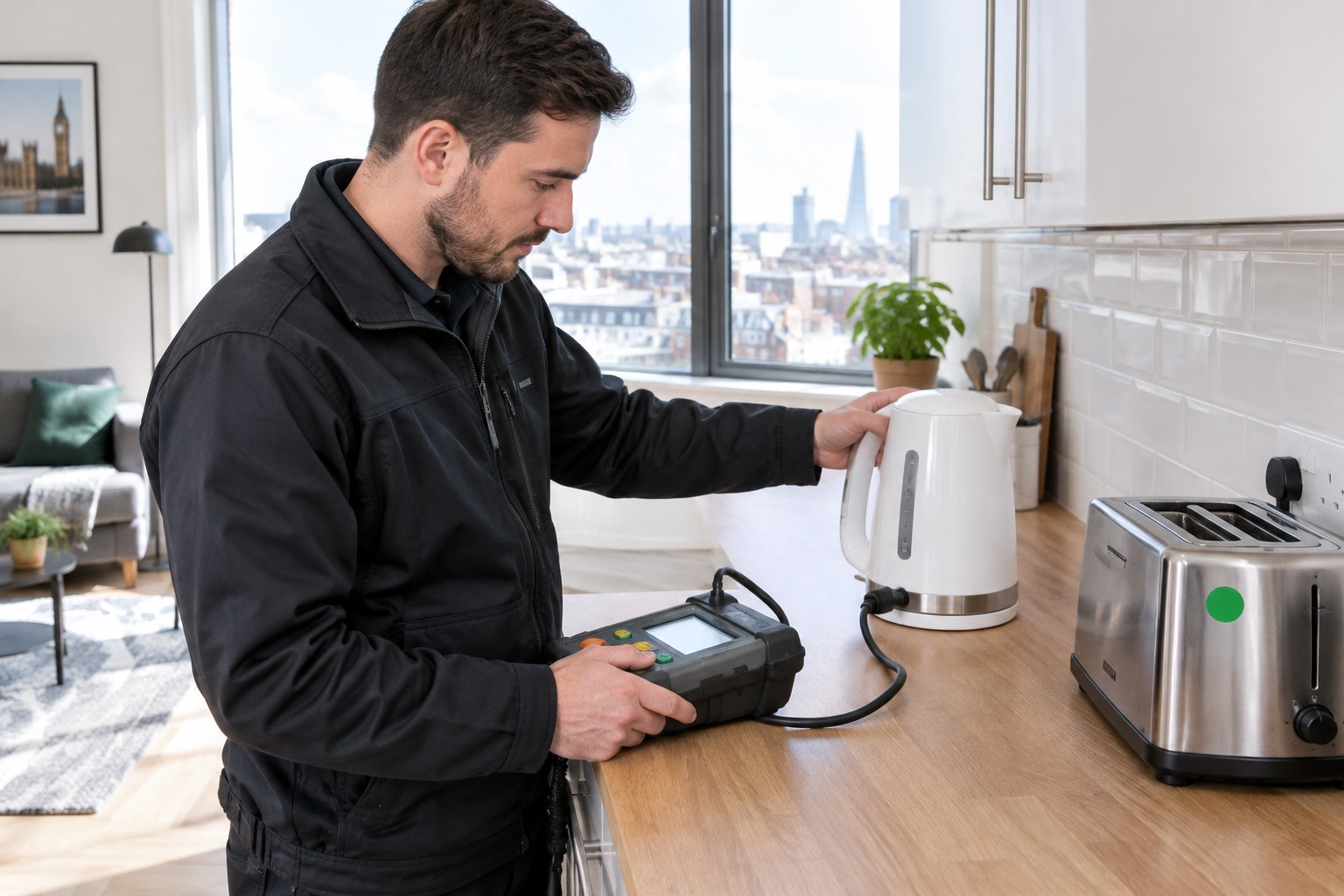
PAT stands for Portable Appliance Testing. It is the routine inspection and testing of electrical appliances to check they are safe to use. The more formal name is in-service inspection and testing of electrical equipment.
A PAT test normally includes:
- A visual inspection of the appliance, plug, cable and fuse for damage, burn marks or loose connections
- Electrical tests using specialist equipment, such as earth continuity, insulation resistance and polarity where relevant
- A pass or fail label on each appliance
- A written or digital PAT test report listing every item tested and the result
Typical landlord-supplied appliances that are tested include kettles, toasters, microwaves, freestanding fridges and freezers, washing machines that plug in, vacuum cleaners, lamps, heaters, TVs and extension leads.
Is PAT testing a legal requirement for landlords?
For most private landlords in England, the short answer is no, not by name. There is no law that says “landlords must PAT test”. However, there are several legal duties that make keeping appliances safe a requirement, and PAT testing is the standard way to meet them and show that you have.
The duties that apply to landlords in England
- Electrical Safety Standards in the Private Rented Sector (England) Regulations 2020: these require an EICR on the fixed electrical installation at least every five years. They do not cover portable appliances, but they show how seriously electrical safety in rented homes is now treated.
- Consumer protection and product safety law: appliances supplied as part of a let must be safe.
- Landlord and Tenant Act 1985 and the Housing Health and Safety Rating System (HHSRS): councils can take action where electrical hazards make a home unsafe.
- Your duty of care: if a faulty appliance you supplied causes a fire or injury, you may be held liable. A dated PAT report is strong evidence that you acted responsibly.
PAT testing rules by country and property type
| Situation | Is PAT testing required? | Notes |
|---|---|---|
| England, single let (furnished) | Not specifically required | Appliances you supply must be safe. PAT testing is the recommended way to show this |
| England, unfurnished let | Usually not needed | Only appliances you supply need checking. Tenants’ own appliances are their responsibility |
| HMO (shared house) | Often required in practice | Many councils include PAT testing in HMO licence conditions, and HMO managers must keep supplied appliances safe |
| Scotland, private rented | Yes, if you supply appliances | The Repairing Standard requires regular PAT testing of landlord-supplied electrical equipment |
| Wales | Not specifically required | Electrical installations must be tested under the Renting Homes rules. Supplied appliances must be safe |
| Holiday lets and serviced accommodation | Strongly expected | Treated as a business. Insurers and booking platforms often ask for evidence of PAT testing |
Scotland
Scottish landlords have a clearer duty. Under the Repairing Standard, landlords who supply electrical equipment must organise regular in-service inspection and testing of that equipment, in addition to the Electrical Installation Condition Report on the fixed wiring. Second-hand appliances must be checked before they are supplied. See the Scottish Government guidance for full details.
HMOs
Houses in multiple occupation carry more risk, because more people use the same appliances and kitchens are shared. HMO managers must keep the electrical supply and any appliances they provide in safe working order, and many councils, including several London boroughs, make annual PAT testing a condition of the HMO licence. Check your licence carefully.
Is PAT testing a legal requirement for holiday lets?
Holiday lets and short-term lets are run as a business, so the owner has wider health and safety duties to guests than a landlord has to a tenant. The Electricity at Work Regulations 1989 require electrical equipment used in a business to be maintained so it does not cause danger.
The law does not say you must use PAT testing to meet that duty, but it is by far the most common way to evidence it. Many holiday let insurers, letting agencies and booking platforms ask for a current PAT report, and guests are more likely to use appliances heavily. For most holiday let owners, an annual PAT test is the sensible standard.
Need PAT testing for a rental property in London?
PAT testing from £54.99 for up to 10 appliances, with pass or fail labels and a digital report.
Which appliances need PAT testing?
Only appliances you supply as part of the let need testing. Tenants are responsible for appliances they bring themselves.
| Usually tested | Not covered by PAT |
|---|---|
| Kettles, toasters and microwaves | Tenants’ own appliances |
| Freestanding fridges, freezers and plug-in washing machines | Fixed wiring, sockets and the consumer unit (covered by the EICR) |
| Vacuum cleaners, irons and hairdryers | Hard-wired appliances such as built-in ovens and electric showers (checked as part of the fixed installation) |
| Lamps, portable heaters and fans | Gas appliances (covered by the gas safety certificate) |
| TVs, extension leads and adaptors | Battery-only devices |
If you are not sure whether an appliance counts, the engineer will advise on the day. It is worth removing any appliance you no longer want to supply before the test.
How often should PAT testing be carried out?
There is no single legal interval. The industry code of practice takes a risk-based approach: equipment that is used heavily, moved around or more likely to be damaged should be checked more often.
For landlords, a practical schedule is:
| Property type | Suggested frequency |
|---|---|
| Furnished single let | At each change of tenancy, and at least every 1 to 2 years |
| HMO | Every 12 months, or as your licence requires |
| Holiday let or serviced accommodation | Every 12 months |
| Scotland, private rented | Regularly, alongside the EICR, plus visual checks at each new tenancy |
| New or replaced appliance | Check before supplying it, especially if second-hand |
Between tests, a quick visual check at every changeover, looking for damaged cables, cracked plugs or scorch marks, helps catch problems early.
PAT testing vs EICR: what’s the difference?
Landlords often confuse these two checks, but they cover different things and you may need both.
| PAT testing | EICR | |
|---|---|---|
| What it checks | Portable appliances you supply | The fixed electrical installation: wiring, sockets, switches and consumer unit |
| Legal status in England | Best practice, often required for HMOs and holiday lets | Legal requirement for private landlords |
| Frequency | Risk-based, commonly yearly or at each tenancy | At least every 5 years, and before a new tenancy if no valid report exists |
| Result | Pass or fail label for each appliance | Satisfactory or unsatisfactory report with C1, C2 and C3 codes |
Booking both at the same visit saves time arranging access with tenants. See our domestic EICR certificate service for the fixed installation.
What happens during a PAT test?
- Inventory. The engineer lists every landlord-supplied appliance in the property.
- Visual inspection. Each appliance, plug, cable and fuse is checked for damage.
- Electrical testing. Earthed (Class I) appliances and double-insulated (Class II) appliances are tested with calibrated PAT equipment.
- Labelling. Each item gets a pass or fail label showing the test date.
- Failed items. Unsafe appliances are taken out of use, and the engineer explains whether a simple fix, such as a new plug or fuse, will solve the problem.
- Report. You receive a digital PAT test report to keep with your compliance records and share with your agent or tenant.
For a typical furnished flat, testing usually takes under an hour.
How much does PAT testing cost for landlords?
PAT testing is usually priced by the number of appliances. At Landlord Sure, PAT testing starts from £54.99 for up to 10 portable appliances, including visual and electrical testing, pass or fail labels and a digital report. That covers most furnished flats and small houses.
Larger HMOs or holiday lets with more appliances will cost more. Contact us for a quote, or book PAT testing together with your EICR or gas safety certificate in one visit.
How long does a PAT test last?
A PAT test does not have a legal expiry date. The result shows the appliance was safe on the day it was tested. Most landlords treat a PAT report as valid until the next scheduled test, typically 12 months for HMOs and holiday lets, or until the next change of tenancy for single lets. If an appliance is damaged or replaced, it should be checked again.
What happens if you don’t PAT test?
- Safety risk: faulty appliances are a common cause of electrical fires and shocks.
- Liability: if a supplied appliance causes harm, you may need to show you took reasonable steps to keep it safe. Without records, that is much harder.
- Licensing: in HMOs, missing PAT records can breach licence conditions.
- Scotland: failing to test supplied appliances can mean the property does not meet the Repairing Standard, and tenants can apply to the Housing and Property Chamber.
- Insurance: insurers may question or reduce claims where appliances were not maintained.
Frequently asked questions
Is PAT testing a legal requirement for landlords in England?
Not specifically. There is no law requiring PAT testing by name for private landlords in England, but you must make sure appliances you supply are safe. PAT testing is the standard way to do this and prove it.
Do landlords need PAT testing in Scotland?
Yes, if you supply electrical appliances. Scottish Government guidance on the Repairing Standard requires regular in-service inspection and testing of landlord-supplied equipment.
Do I need to PAT test an unfurnished property?
Usually not, unless you have left any appliances, such as a fridge, washing machine or microwave, for the tenant to use.
Is PAT testing a legal requirement for holiday lets?
Holiday lets are businesses, so the Electricity at Work Regulations 1989 require equipment to be kept safe. PAT testing is the usual way to show this, and insurers and platforms often ask for it.
How often should PAT testing be carried out?
There is no fixed legal interval. Most landlords test at each change of tenancy and at least every 1 to 2 years, while HMOs and holiday lets are usually tested every 12 months.
How long does PAT testing take?
Most furnished flats take under an hour. Larger HMOs and holiday lets with more appliances take longer.
Can a landlord do their own PAT testing?
Simple visual checks can be done by the landlord, but full PAT testing should be carried out by a competent person with calibrated equipment and the knowledge to interpret the results.
Is PAT testing part of an EICR?
No. An EICR covers the fixed wiring, sockets and consumer unit. PAT testing covers portable appliances. They are separate checks, though they can be booked on the same visit.
Book PAT testing with Landlord Sure
From £54.99 for up to 10 appliances, qualified engineers, pass or fail labels and a digital report. Add an EICR, gas safety certificate or fire safety certificate to the same visit.
Sources: GOV.UK – Guide for landlords: electrical safety standards in the private rented sector; Scottish Government – Repairing Standard: statutory guidance for private landlords; NRLA – PAT testing guidance. Information checked October 2026. This guide is general information, not legal advice.