
Professional Domestic EICR Inspections for London Properties
- Residential Property Inspections
- BS 7671 Compliant Testing
- Qualified & Experienced Engineers
- Digital EICR Report Within 24 Hours
- Suitable for Landlords & Homeowners
- UK Wide Coverage
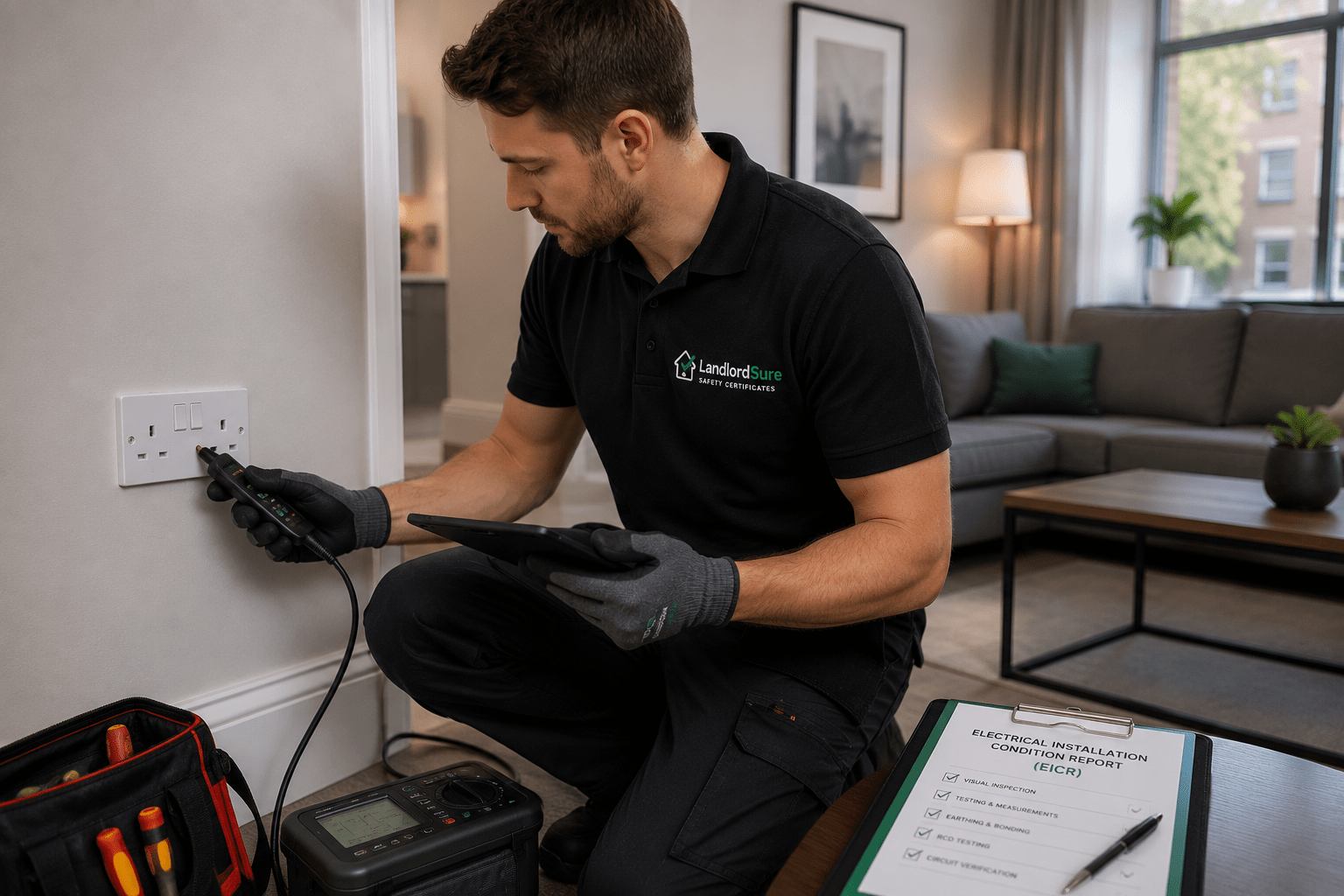
Landlord Sure provides professional domestic EICR inspections across London for landlords, homeowners, letting agents and property managers. A domestic EICR certificate provides a clear record of the condition of fixed electrical installations, including any defects, observations or recommended remedial work.
An EICR certificate shows that the fixed electrical installation in a rented home is safe. You can read the HSE electrical safety guidance to understand your duties, then book an EICR certificate with Landlord Sure.
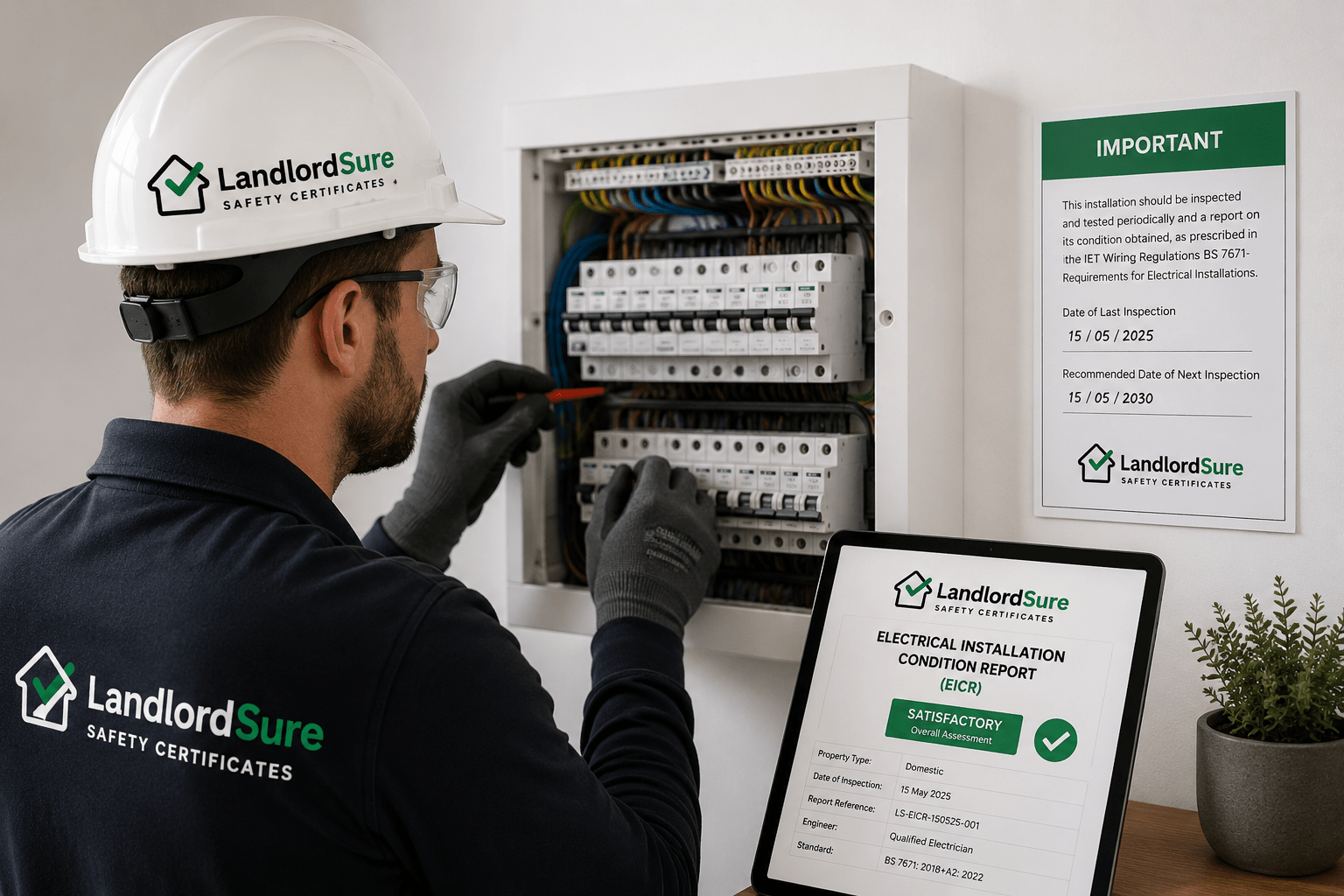
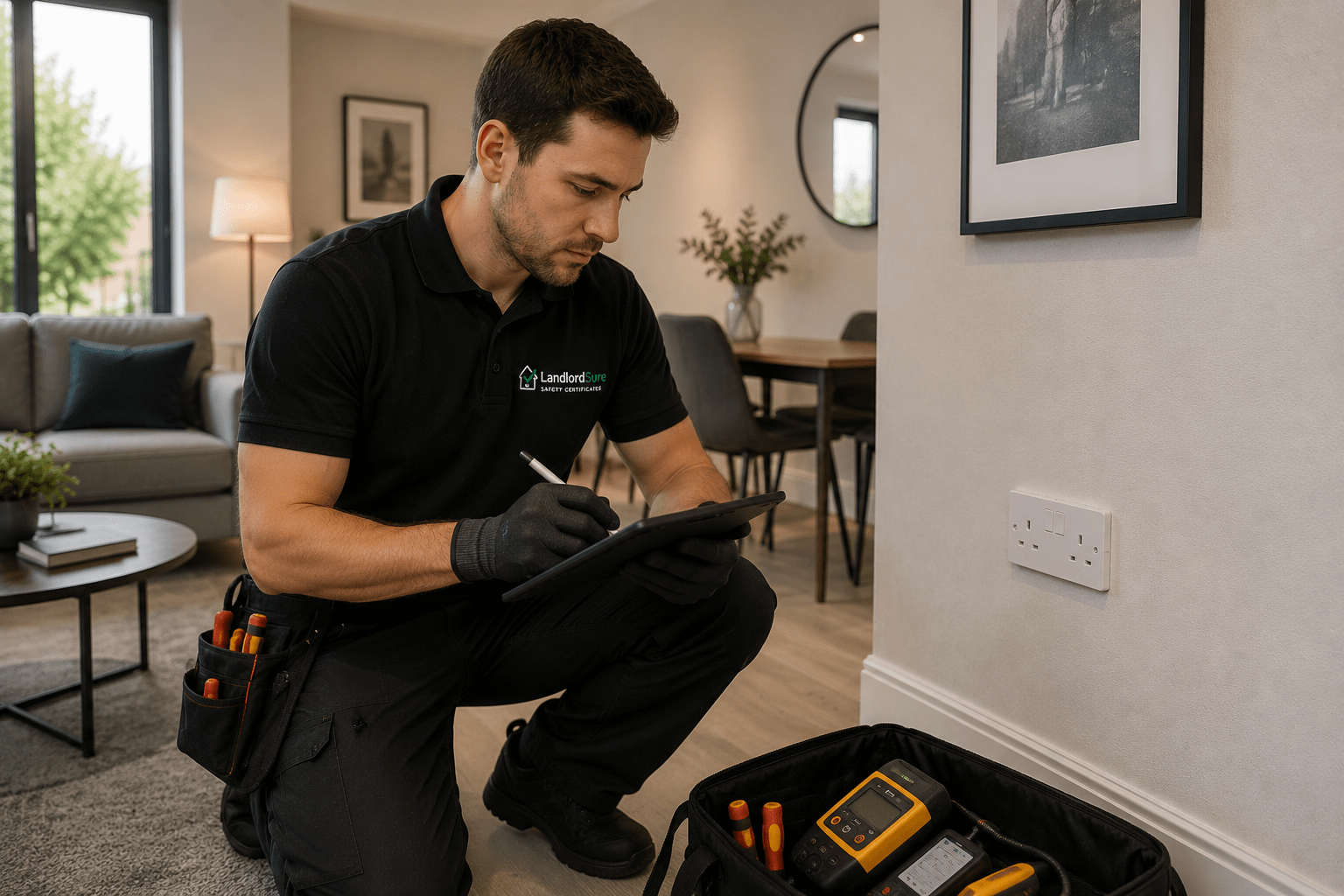
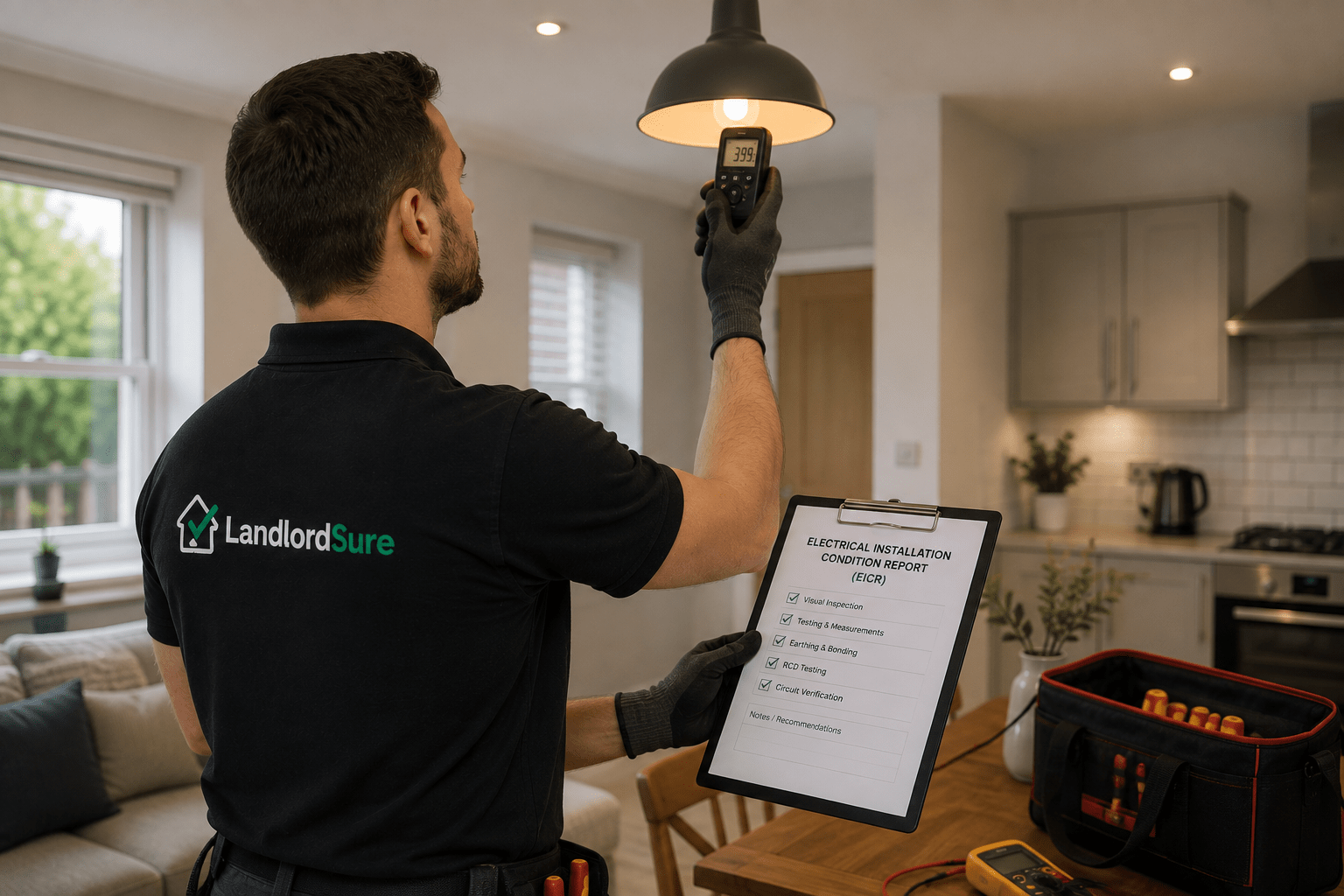
Our qualified engineers inspect consumer units, wiring, sockets, switches, lighting circuits, earthing, bonding, and protective devices using professional testing equipment. Every inspection is carried out to the highest industry standards, providing landlords and homeowners with a clear understanding of their property’s electrical condition.
Whether you require a domestic EICR certificate for landlord compliance, property sales, insurance purposes or general electrical safety, Landlord Sure provides reliable inspections, transparent reporting and fast digital certification to help you manage your property’s electrical safety.
Domestic EICR Pricing Plan
Perfect for studio apartments and single-room properties requiring a professional electrical safety inspection.
£77.99
- Full Electrical Inspection
- BS 7671 Compliant Testing
- Digital EICR Certificate
- Qualified Local Engineer
- Report Within 24 Hours
Ideal for flats, apartments, terraced and semi-detached homes with up to three bedrooms.
£97.99
- Complete Property Inspection
- Consumer Unit & Circuit Testing
- Detailed Digital EICR Report
- Qualified & Certified Engineers
- Certificate Within 24 Hours
Designed for larger family homes requiring a comprehensive electrical safety assessment.
£107.99
- Comprehensive Electrical Inspection
- Full Circuit & Socket Testing
- Detailed Compliance Report
- Fast Appointment Available
- Digital Certificate Included
Suitable for large residential properties and small HMOs requiring a complete EICR inspection.
£144.99
- Extensive Property Inspection
- Complete Electrical Testing
- Qualified Inspection Engineers
- BS 7671 Compliant Report
- 24-Hour Certificate Delivery
Ideal for larger residential homes and licensed HMOs with additional electrical circuits.
£164.99
- Full Electrical Assessment
- Advanced Circuit Testing
- Detailed Safety Report
- Nationwide Coverage
- Digital EICR Certificate
Designed for large HMOs, shared accommodation and multi-room residential properties.
£184.99
- Complete Electrical Inspection
- Professional Compliance Report
- Priority Engineer Booking
- Fully Qualified Electricians
- Fast Digital Certification
For large family homes and HMOs with eight bedrooms and multiple circuits.
£204.99
- Complete Electrical Inspection
- Professional Compliance Report
- Priority Engineer Booking
- Fully Qualified Electricians
- Fast Digital Certification
EICR Requirements for London Landlords
Private landlords in England must ensure the electrical installations in their rented properties are inspected and tested by a qualified person at least every five years. The inspection normally results in an Electrical Installation Condition Report (EICR), which records the condition of the electrical installation and identifies any required remedial work.
Landlords must provide the relevant EICR documentation to tenants as required by the regulations, including providing a copy to a new tenant before they occupy the property. If the report identifies C1, C2 or FI issues, the required remedial work or further investigation must be completed within the applicable timeframe. The domestic EICR certificate cost depends on the size of the property, with clear pricing provided for different property sizes.
EICR & Electrical Safety Guidance
Stay informed about electrical safety requirements for rented properties with official guidance from the UK Government.
What's Included in Our EICR Inspection?
A Landlord Sure Electrical Installation Condition Report (EICR) is a comprehensive inspection and testing service designed to assess the safety, condition, and compliance of your property’s electrical installation. Our qualified engineers carry out every inspection in accordance with the latest BS 7671 Wiring Regulations, helping landlords, homeowners, letting agents, and businesses meet their legal obligations with confidence.
During the inspection, we thoroughly examine consumer units, electrical wiring, sockets, switches, lighting circuits, earthing and bonding arrangements, and all fixed electrical installations. Using advanced testing equipment, we identify electrical defects, signs of deterioration, overloaded circuits, and potential safety hazards before they become serious issues.
Once the inspection is complete, you’ll receive a detailed digital EICR certificate outlining the condition of your electrical installation, any observations or recommendations, and whether remedial work is required. At Landlord Sure, we deliver clear reporting, transparent advice, and fast certification, helping you keep your property safe, compliant, and legally protected. Our domestic EICR certificate service is available for residential properties across London, including houses, flats and rental properties.
Stay Compliant with a Landlord Sure EICR Certificate
An Electrical Installation Condition Report (EICR) from Landlord Sure gives you confidence that your property’s electrical installation is safe, compliant, and operating in accordance with the latest BS 7671 Wiring Regulations. Our experienced engineers carry out comprehensive inspections to identify electrical faults, wear and tear, overloaded circuits, and potential fire or electric shock risks before they become serious problems.
Whether you’re a landlord meeting legal obligations, a homeowner prioritising safety, or a business owner maintaining compliance, our EICR inspections provide clear, easy-to-understand digital reports with expert recommendations. At Landlord Sure, we combine qualified engineers, transparent pricing, and fast nationwide service to help protect your property, your occupants, and your investment.
How We Deliver Your EICR Certificate Fast, Professional & Fully Compliant
From booking your inspection to receiving your certificate, we make the entire process simple, transparent, and hassle-free.

Book Your Inspection
Schedule your inspection online or by phone at a time that suits you. We offer flexible appointments across London.
Property Inspection
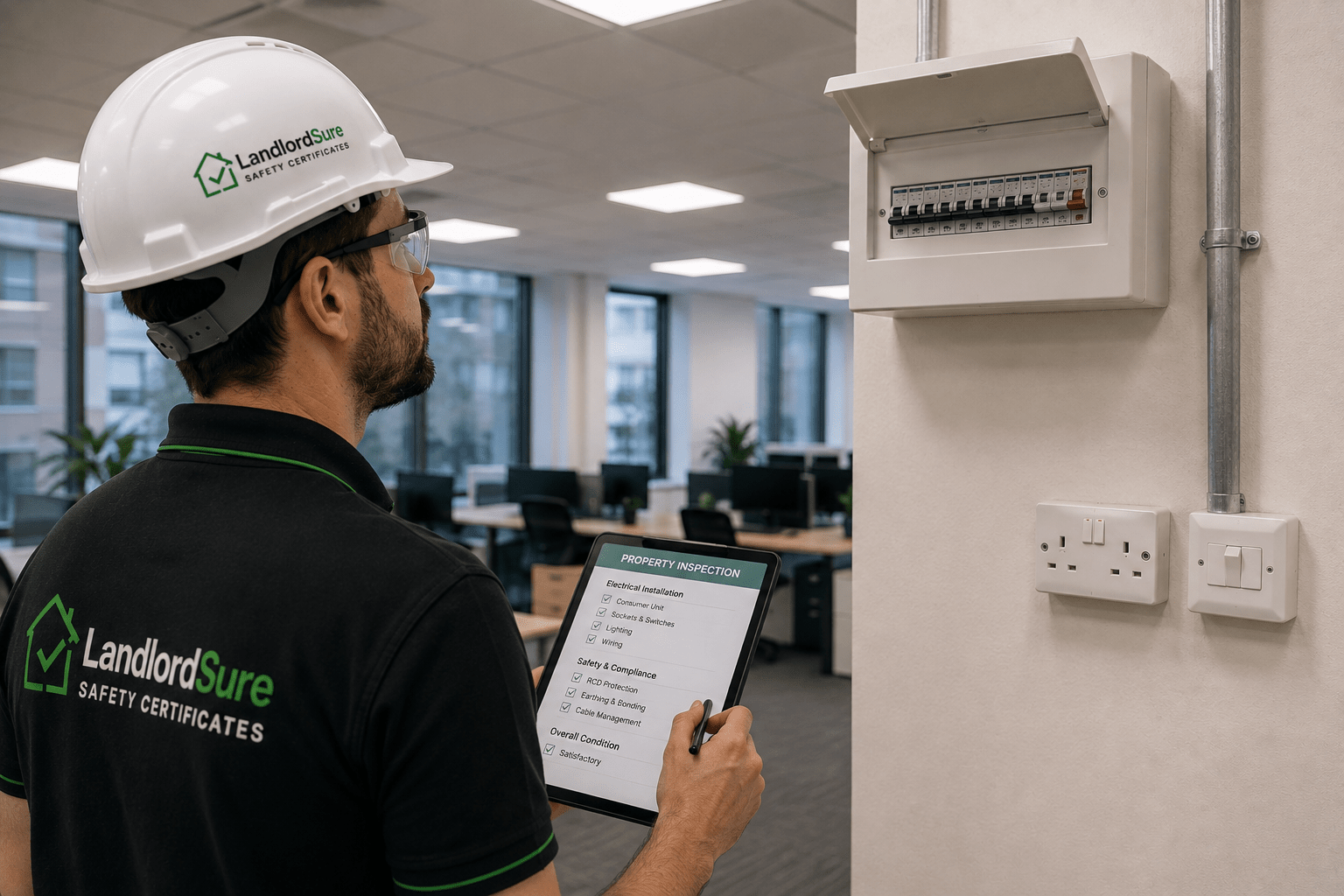
Our qualified electrician visits your property to carry out a thorough inspection and testing of your electrical installation in accordance with BS 7671.

Receive Your Certificate
You’ll receive a detailed digital report within 24 hours, including observations, recommendations, and compliance status.
What Is an EICR Certificate?
An EICR, or Electrical Installation Condition Report, is a formal inspection and test of the fixed electrical installation in a property. It covers the consumer unit, wiring, sockets, switches, light fittings, earthing and bonding. It does not cover portable appliances, which are checked through PAT testing.
The electrician records any defects using codes, gives the installation an overall result of satisfactory or unsatisfactory, and sets the date for the next inspection. Although people often call it an "EICR certificate", it is technically a report, because it describes the condition of an existing installation rather than certifying new work.
How Much Does an EICR Cost in London?
EICR prices depend mainly on the size of the property and the number of circuits. Our fixed prices for London homes are:
| Property size | Fixed price |
|---|---|
| Studio | £77.99 |
| 1 to 3 bedrooms | £97.99 |
| 4 bedrooms | £107.99 |
| 5 bedrooms | £144.99 |
| 6 bedrooms | £164.99 |
| 7 bedrooms | £184.99 |
| 8 bedrooms | £204.99 |
So a typical 3-bed house or flat costs £97.99. Larger properties and HMOs take longer because they usually have more circuits and sometimes more than one consumer unit. Any remedial work is quoted separately after the inspection.
How Long Does an EICR Certificate Last?
For privately rented homes in England, the Electrical Safety Standards in the Private Rented Sector (England) Regulations 2020 require an inspection at least every 5 years, or sooner if the previous report recommends it. For owner-occupied homes, a check every 10 years, or when the property changes hands, is the usual recommendation.
The electrician may recommend a shorter interval for older installations, HMOs or properties with signs of wear. Always go by the next inspection date written on your report.
Landlord Deadlines Under the 2020 Regulations
- give a copy of the report to existing tenants within 28 days of the inspection
- give new tenants a copy before they move in
- give a copy to the local council within 7 days if they ask for it
- complete any required remedial work within 28 days, or sooner if the report says so, and send written confirmation to the tenant and the council
Councils can fine landlords up to £30,000 for breaches, so it pays to keep inspections and paperwork up to date.
What Happens If an EICR Is Unsatisfactory?
A report is unsatisfactory if it records any C1 (danger present), C2 (potentially dangerous) or FI (further investigation) items. C3 items are recommended improvements and do not cause a fail on their own. Once the work is done, the electrician issues confirmation, such as a Minor Works Certificate or an Electrical Installation Certificate (EIC), to show the installation is now safe. Read our full guide to EICR codes C1, C2, C3 and FI.
EICR vs EIC: What Is the Difference?
An EICR checks the condition of an existing installation. An EIC (Electrical Installation Certificate) is issued when new electrical work is installed, such as a full rewire, a new circuit or a new consumer unit. Smaller jobs, like adding a socket, are covered by a Minor Works Certificate. Landlords need a current EICR, and should keep any EICs or Minor Works Certificates as proof of work completed.
Frequently Asked Questions About Domestic EICR Certificates
Get answers to the most common questions about Electrical Installation Condition Reports (EICRs), legal requirements, inspection processes, pricing and certificate validity for residential and commercial properties.

What is an EICR Certificate?
An Electrical Installation Condition Report (EICR) is a comprehensive inspection of a property’s electrical installation. It assesses the condition of wiring, consumer units, sockets, lighting circuits, earthing, and protective devices to ensure they comply with the latest BS 7671 Wiring Regulations and are safe for continued use.
How quickly will I receive my EICR Certificate?
Once the inspection has been completed, your digital EICR report is typically issued within 24 hours, allowing you to demonstrate compliance without unnecessary delays.
How often should an EICR be carried out?
For most residential rental properties, an EICR is recommended every 5 years or at the start of a new tenancy if required. Commercial properties should be inspected at intervals based on the property’s use, condition, and previous inspection recommendations.
What does an EICR inspection include?
Our engineers inspect consumer units, distribution boards, wiring systems, sockets, switches, lighting circuits, earthing, bonding, protective devices, and electrical accessories. We also carry out electrical testing to identify any faults or safety concerns.
How long does an EICR inspection take?
Inspection times vary depending on the size and complexity of the property. Most residential inspections take between 2–4 hours, while larger commercial premises may require additional time.
What happens if my property fails the EICR?
An EICR is not simply a pass-or-fail test. The report records observations using classification codes such as C1, C2, C3 and FI. C1 indicates danger present, C2 indicates potentially dangerous conditions, C3 indicates an improvement is recommended, and FI means further investigation is required. Where C1, C2 or FI observations are identified, appropriate remedial action or further investigation may be required.