
Table of contents
Key points
- EICR stands for Electrical Installation Condition Report, a formal inspection of a property’s fixed wiring, sockets, switches and consumer unit.
- Problems are recorded with codes: C1 (danger present), C2 (potentially dangerous), C3 (improvement recommended) and FI (further investigation needed).
- Any C1, C2 or FI makes the report unsatisfactory. C3 codes on their own do not.
- Private landlords in England must have the electrical installation inspected at least every five years and fix C1, C2 and FI items within 28 days or sooner if the report says so.
If you have just received an EICR, the codes can look confusing. A report covered in C2s and C3s doesn’t always mean the property is dangerous, and a single code can be the difference between a satisfactory and an unsatisfactory result. This guide explains exactly what each code means, with examples, so you know what action to take and what can safely wait.
What does EICR mean?
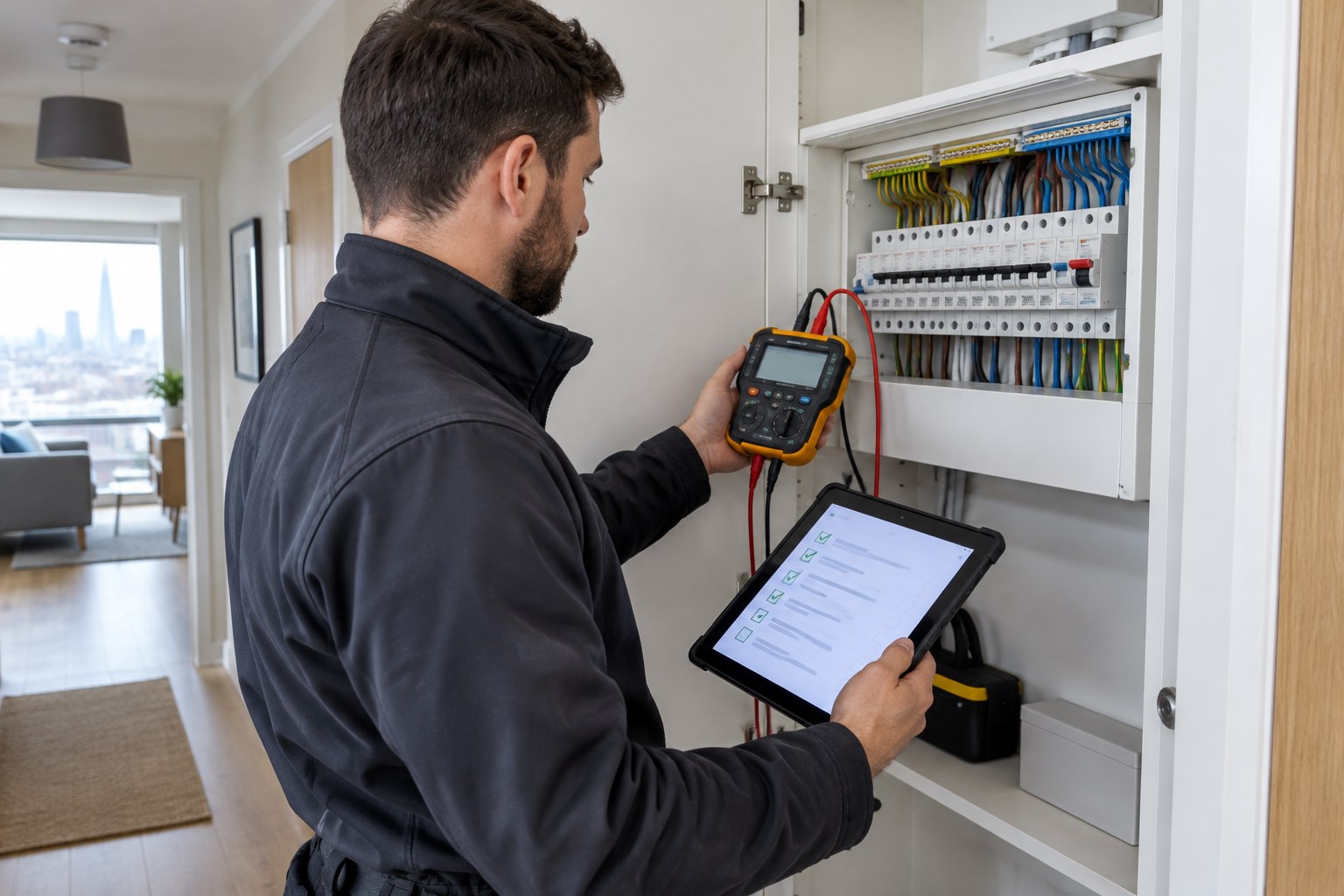
EICR stands for Electrical Installation Condition Report. It is a detailed inspection and test of the fixed electrical installation in a building, carried out by a qualified electrician against the UK wiring regulations, BS 7671.
People often call it an “electrical safety certificate” or “landlord electrical certificate”, but technically it is a report, not a certificate. It records the condition of the installation on the day of the inspection and lists anything that is dangerous, potentially dangerous or would benefit from improvement.
What does an EICR check?
- The consumer unit (fuse box), circuit breakers and RCDs
- Wiring and cables, including their condition and suitability
- Sockets, switches and light fittings
- Earthing and bonding to gas and water pipes
- Fixed appliances such as electric showers, cookers and immersion heaters, as part of their circuits
- Test results for every circuit, such as insulation resistance and earth fault loop impedance
An EICR does not test portable appliances such as kettles and toasters. That is a separate check called PAT testing.
EICR codes explained: C1, C2, C3 and FI
When the electrician finds something that does not meet the current standard, they record it as an “observation” and give it a classification code. These codes follow industry guidance from Electrical Safety First (Best Practice Guide 4), which electricians use to keep coding consistent.
| Code | Meaning | Action needed | Result |
|---|---|---|---|
| C1 | Danger present. Risk of injury | Immediate action. The electrician should make it safe before leaving | Unsatisfactory |
| C2 | Potentially dangerous | Urgent remedial action | Unsatisfactory |
| C3 | Improvement recommended | Not urgent. Consider improving | Satisfactory (on its own) |
| FI | Further investigation required without delay | Investigate as soon as possible | Unsatisfactory |
C1: Danger present
A C1 means there is an immediate risk of electric shock or fire. The electrician should make the danger safe straight away, for example by isolating the circuit or removing a damaged accessory, and tell the person responsible for the property.
Typical C1 examples:
- Exposed live parts, such as a broken socket or switch with live conductors showing
- Incorrect polarity that makes metal parts live
- Burnt, melted or badly damaged accessories or cables showing signs of overheating
C2: Potentially dangerous
A C2 means the fault is not dangerous right now, but could become dangerous if something else happens, such as a further fault or a person touching the wrong part. It needs urgent attention.
Typical C2 examples:
- No earthing, or an earthing arrangement that is inadequate
- Missing main protective bonding to incoming gas or water pipes
- Test results showing a circuit would not disconnect quickly enough in a fault
- Damaged cables or accessories that are not yet exposing live parts
- No RCD protection for sockets likely to be used for equipment outdoors
C3: Improvement recommended
A C3 means the installation does not meet the current edition of the wiring regulations, but it is not dangerous. Many older but safe installations have C3s simply because the standards have moved on since they were installed.
Typical C3 examples:
- No surge protection device (SPD)
- An older consumer unit that is safe but would not be installed today
- Some circuits without RCD protection where this does not create a danger
- Minor labelling or documentation issues
A report with only C3s is satisfactory. You are not legally required to fix C3s, although it is often worth doing so when you next carry out electrical work.
FI: Further investigation required
An FI means the electrician found something that may be a problem but could not fully confirm it during the inspection, often because of limited access or time. It must be investigated without delay, and the result may turn into a C1, a C2 or no issue at all.
Typical FI examples:
- A circuit that cannot be traced or identified
- Unexpectedly low insulation resistance readings that need more testing
- Signs of a possible fault behind a wall or floor that could not be reached
Need an EICR in London?
Domestic EICRs from £77.99 for studios and £97.99 for 1 to 3 bedroom homes, carried out by qualified electricians.
Satisfactory vs unsatisfactory EICR
At the end of the report, the electrician gives an overall assessment of the installation:
- Satisfactory: no C1, C2 or FI codes. The report may still include C3 recommendations.
- Unsatisfactory: one or more C1, C2 or FI codes. Remedial work or further investigation is needed.
It only takes one C2 or FI for the whole report to be unsatisfactory, even if everything else is in good condition.
EICR rules for landlords
Under the Electrical Safety Standards in the Private Rented Sector (England) Regulations 2020, private landlords must:
- Have the electrical installation inspected and tested by a qualified and competent person at least every five years, or more often if the report says so.
- Give a copy of the report to existing tenants within 28 days of the inspection.
- Give a copy to new tenants before they move in.
- Give a copy to the local council within 7 days if they ask for it.
- Carry out any remedial work or further investigation for C1, C2 or FI items within 28 days, or sooner if the report specifies.
- Get written confirmation from the electrician that the work is done, and send it to the tenant and the council within 28 days of completing the work.
Councils can impose financial penalties of up to £30,000 for breaches of the Regulations, and can arrange remedial work themselves and recover the cost from the landlord. Read the GOV.UK guide for landlords for full details.
What to do after an unsatisfactory EICR
- Read the observations. Check which items are coded C1, C2 or FI. These are the only ones you must fix to make the report satisfactory.
- Get a quote for remedial work. Many electricians, including Landlord Sure, can quote for the fixes straight away.
- Book the work within 28 days, or sooner if the report gives a shorter deadline.
- Get written confirmation, usually an Electrical Installation Certificate or Minor Works Certificate, showing the work has been done.
- Send confirmation to your tenants and, if required, to the council.
- Keep everything together. Store the original EICR and the remedial certificates with your other compliance records.
You do not normally need a completely new EICR after remedial work. The original report plus the completion certificates show the installation is now safe.
How often do you need an EICR?
| Property type | Recommended maximum interval |
|---|---|
| Private rented home (England) | Every 5 years, or sooner if the report recommends |
| HMO | Every 5 years, or as your licence requires |
| Owner-occupied home | Every 10 years, or on change of occupancy |
| Commercial premises | Typically every 5 years, shorter for some uses |
| After major alterations or a change of use | Consider a new inspection |
The electrician will record the recommended date of the next inspection on the report. If it is shorter than five years, landlords must follow the shorter interval. For business premises, see our commercial EICR service.
EICR vs EIC vs Minor Works Certificate
Electrical paperwork comes in a few forms, and landlords often mix them up:
| Document | When it is issued | What it proves |
|---|---|---|
| EICR (Electrical Installation Condition Report) | Periodic inspection of an existing installation | The condition of the installation on the day it was tested |
| EIC (Electrical Installation Certificate) | New installation, new circuit or consumer unit replacement | New work was designed, installed and tested to BS 7671 |
| Minor Electrical Installation Works Certificate | Small jobs such as adding a socket or replacing an accessory | Minor work was carried out and tested safely |
After an unsatisfactory EICR, the remedial work is usually recorded on an EIC or a Minor Works Certificate, depending on the size of the job.
How to prepare for an EICR
- Give tenants notice and explain the power will be switched off for parts of the visit.
- Make sure the consumer unit is accessible, and clear cupboards or furniture blocking sockets where possible. Restricted access leads to limitations on the report.
- Find previous reports and certificates, as they help the electrician understand the installation.
- Ask tenants to unplug sensitive equipment, such as computers, before testing starts.
- Allow enough time. Most flats take two to four hours, and larger properties longer.
How much does an EICR cost?
EICR prices depend mainly on the size of the property and the number of circuits. Landlord Sure’s fixed London prices for domestic EICRs are:
| Property size | Price |
|---|---|
| Studio | £77.99 |
| 1 to 3 bedrooms | £97.99 |
| 4 bedrooms | £107.99 |
| 5 bedrooms | £144.99 |
| 6 bedrooms | £164.99 |
| 7 bedrooms | £184.99 |
| 8 bedrooms | £204.99 |
Remedial work is quoted separately. You can also book a gas safety certificate or EPC in the same visit.
Frequently asked questions
What does EICR stand for?
EICR stands for Electrical Installation Condition Report. It is an inspection and test of a property’s fixed electrical installation.
Does a C3 fail an EICR?
No. C3 means improvement recommended. A report with only C3 codes is satisfactory.
Does a C2 fail an EICR?
Yes. Any C2 makes the report unsatisfactory, and landlords must have the work done within 28 days or sooner if specified.
What does FI mean on an EICR?
FI means further investigation required without delay. Something may be wrong but could not be confirmed during the inspection. An FI makes the report unsatisfactory until it is investigated.
What does LIM mean on an EICR?
LIM means limitation. Part of the installation could not be inspected or tested, for example because of restricted access. Limitations should be explained in the report.
Is a Type AC RCD a C2 on an EICR?
Not usually on its own. Type AC RCDs are restricted for new installations under the current wiring regulations, but on an existing installation they are generally treated as an improvement point rather than a danger. The electrician will code based on the specific installation.
How long does an EICR take?
A typical flat takes around two to four hours. Larger houses and HMOs take longer, depending on the number of circuits.
Do I need a new EICR after remedial work?
Not normally. Keep the original report together with the electrician’s written confirmation or certificates for the remedial work.
Book your EICR with Landlord Sure
Fixed prices from £77.99, qualified electricians, clear explanations of every code and remedial quotes on the day. Add PAT testing or a gas safety certificate to the same visit.
Sources: GOV.UK – Guide for landlords: electrical safety standards in the private rented sector; NICEIC – Electrical Installation Condition Reports; Electrical Safety First – Best Practice Guide 4. Information checked October 2026. This guide is general information, not legal or electrical advice.